To introduce a new dog to an existing dog, prepare separate spaces at home, start with a neutral parallel walk, and allow closer contact only while both dogs remain comfortable. Keep early interactions brief, feed and rest them separately, and use secure separation whenever you cannot supervise.
A friendly meeting outdoors is encouraging, but it does not establish how two dogs will feel about sharing a doorway, a bed, or your attention. The next step should depend on what both dogs show you, not on how quickly you hope they will become friends.
For Leesburg and Loudoun County families, a workable introduction plan also needs to fit everyday life. This guide covers preparation, first meetings, and household management, with clear points for pausing or seeking help. It is not a treatment plan for dogs with an aggression or bite history.
What Should You Prepare Before the Dogs Meet?
Prepare two complete, secure living areas and a plan for managing movement between them. Also consider each dog’s health, history with other dogs, and ability to cope with the proposed arrangement before arranging contact.
Check Health, History, and Household Fit
Ask your veterinarian about vaccination status, illness, and whether either dog has health concerns that affect the meeting. If the newcomer is a puppy, confirm an appropriate location and timing rather than assuming a public walking area is suitable. For broader preventive-care planning, see our guide to regular veterinary checkups for dogs.
Ask the rescue, breeder, or previous caregiver what is known about the newcomer’s interactions with dogs, feeding behavior, and comfort behind barriers. An unknown history is not proof of a problem, but it is a reason to avoid assumptions.
If either dog has a history of bites, fights, repeated attacks, or serious guarding, arrange veterinary and qualified behavior guidance before attempting face-to-face contact. Do not use an ordinary introduction checklist to test whether that history still matters.
Set Up Separate Areas Before Arrival
Each dog should have access to water, a comfortable resting place, and appropriate care without needing to pass close to the other dog. Plan separate feeding spaces as well as somewhere each can take a break.
Before the new dog arrives:
- Install suitable gates or choose rooms with doors that close securely.
- Check that neither dog can jump, push through, or knock over the barriers.
- Put away food bowls, chews, and valued toys in areas intended for initial shared contact.
- Plan who will handle each dog during the first meeting and how you will end it calmly.
- Keep children and other pets out of the introduction area.
- Arrange enough time to supervise without rushing into work, visitors, or another commitment.
If you already have multiple resident dogs, introduce them individually rather than allowing the group to crowd the newcomer.
How Do You Start With a Neutral Parallel Walk?
Have one capable adult handle each dog and walk in the same direction with enough distance that both can remain comfortable. A parallel walk means moving alongside one another without requiring an immediate greeting.
Choose a quiet, neutral location away from the resident dog’s home and yard. Avoid a crowded dog park, a narrow path, or somewhere unfamiliar dogs are likely to approach. A place your resident dog frequently claims or patrols may not be a useful neutral choice.
Use this starting sequence:
- Begin apart. Let each dog explore with their own handler before walking parallel.
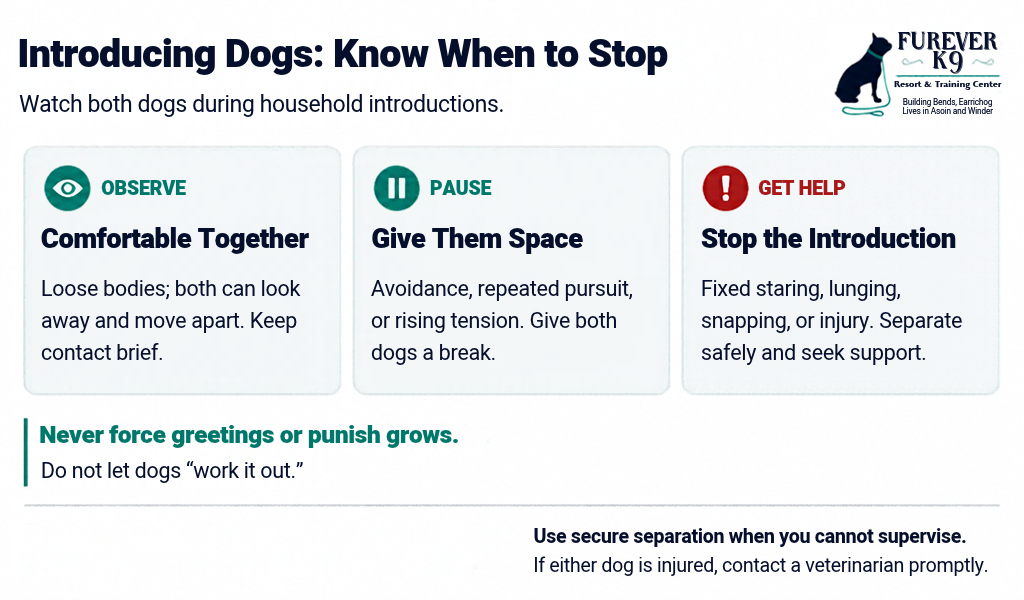
- Maintain comfortable distance. Both dogs should be able to notice the other without sustained staring, pulling toward them, or trying to escape.
- Keep control without forcing contact. Use secure, appropriate walking equipment and avoid drawing the dogs into a tight face-to-face position.
- Reward calm engagement separately. If using food, each handler should reward their own dog promptly with space between the dogs. Do not offer treats between their noses or create competition.
- Move closer only if both remain comfortable. If either becomes worried or increasingly excited, add distance or end the session rather than insisting on the next step.
If you cannot maintain comfortable control or either dog remains fixated, do not proceed to a greeting. Get help planning a more suitable introduction.
When Should You Allow a Brief Greeting?
Allow a brief greeting only when both dogs show relaxed behavior and can disengage comfortably. A greeting is optional, not something they must complete during the first walk.
Look for loose bodies and the ability to look away, investigate the surroundings, or return attention to a handler. A wagging tail alone does not establish that contact is appropriate.
If both are comfortable, allow a short sniff without forcing a head-on approach or holding them nose to nose. Then calmly move apart and continue walking. Wisconsin Humane Society’s advice on brief, voluntary greetings emphasizes giving dogs the choice to approach and allowing either dog to move away.
Do not let one dog follow persistently when the other tries to leave. If a calm call-away does not work, the interaction is too difficult to continue; avoid dragging the dogs through another greeting.
Several comfortable meetings may be needed before bringing them into shared household space. A walk with no direct contact can still be a useful first step.
How Should You Move the Introduction Into Your Home?
Treat home entry as a new stage and begin with the separate areas you prepared. Do not turn a pleasant outdoor meeting into unrestricted access to the house.
If the dogs need to travel home, use separate vehicles or an appropriately secured arrangement that prevents contact. Do not put them together in the back seat for the first time. Wisconsin Humane Society’s transport and home-entry recommendations highlight the need to manage this transition separately.
Avoid crowding the dogs through a doorway or narrow hall together. Let the newcomer explore their prepared area without the resident dog following closely. Keep the resident dog’s familiar routines and resting access as consistent as practical.
Use Gates Without Forcing Barrier Contact
A secure gate can prevent direct contact while you observe how the dogs respond to one another. Keep enough distance that neither is pressed against it, and do not place food or chews where the other dog can approach through the barrier.
Gates are not suitable for every pair. If either dog charges, barks intensely, lunges, or stares persistently through one, increase separation and use a secure solid door instead of repeatedly staging another nose-to-nose encounter.
Wisconsin Humane Society’s guidance on reactions behind barriers notes that dogs may respond differently behind a gate than they did outside. Seek professional support if either dog cannot settle or disengage with the available separation.
Add Brief Shared Time Gradually
When both dogs are comfortable with the earlier stages, consider a short supervised period in a spacious area without food, chews, or valued toys. Give them room to move apart, and keep the session manageable for the adults supervising.
End before excitement rises or one dog starts pressuring the other. Return them to their separate spaces for rest and individual attention. Increase shared time only after repeated comfortable interactions, not because a particular number of days has passed.