

Why Routine Veterinary Care Matters
- Wellness care is preventive care. Routine exams help a veterinarian track changes, update prevention plans, and investigate subtle concerns before they become more complicated.
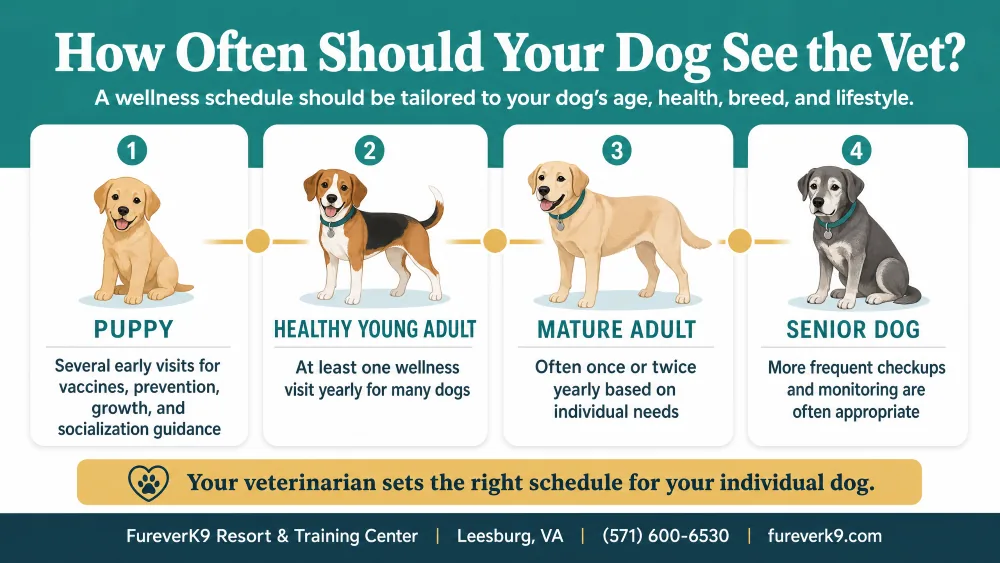
- There is no one schedule for every dog. Healthy adult dogs commonly need at least an annual visit, while puppies, seniors, and dogs with health conditions may need more frequent appointments.
- Exams are broader than vaccines. A wellness visit can include a physical exam, weight and body-condition assessment, parasite-prevention discussion, dental review, behavior conversation, and recommended screening tests.
- Small changes are worth mentioning. Shifts in appetite, thirst, mobility, sleep, behavior, weight, or breath can help your veterinarian decide whether your dog needs earlier attention.
- Furever K9 supports routines, not diagnosis. Training, grooming, boarding, and daycare can help owners maintain consistent care and notice observable changes, but veterinary professionals diagnose and treat medical conditions.
Why Do Regular Vet Checkups Matter for Dogs?
What a routine exam supports | Why it matters for your dog |
Baseline health tracking | Repeated measurements make it easier to notice shifts in body condition, weight, mobility, and behavior. |
Vaccines and parasite prevention | Your veterinarian can tailor prevention to your dog’s age, lifestyle, travel, and local exposure risks. |
Dental and ear checks | Problems in the mouth or ears can be uncomfortable before they are obvious to an owner. |
Behavior conversations | A change in behavior can relate to training, environment, pain, aging, anxiety, or other health factors. |
Personalized recommendations | Breed, life stage, health history, and home routine all affect what your dog needs. |
How Often Should a Dog See the Vet?
Life stage or situation | General wellness-care pattern | Topics your veterinarian may discuss |
Puppy | Several appointments in early life, often spaced around vaccine and prevention needs | Vaccinations, parasite prevention, nutrition, microchipping, socialization, and safe activity |
Healthy young adult | At least annual wellness care for many dogs | Body condition, dental care, behavior, lifestyle risks, vaccines, and prevention |
Mature adult | Often once or twice yearly, depending on individual needs | Weight changes, mobility, screening tests, dental health, and age-related risks |
Senior dog | More frequent visits are often appropriate | Pain, mobility, cognitive changes, laboratory testing, diet, and quality of life |
Chronic condition or new concern | Schedule determined by the veterinarian | Monitoring, medication review, symptom tracking, and individualized testing |
What Happens During an Annual Dog Wellness Exam?
What Should You Bring to Your Dog’s Vet Appointment?
Bring or prepare | Why it helps |
Medication and supplement list | Lets the veterinary team review exact products, amounts, and timing. |
Diet details | Supports an informed conversation about calories, treats, appetite, and body condition. |
Recent changes you have noticed | Helps identify patterns in mobility, energy, sleep, thirst, appetite, or behavior. |
Short videos, if safe to obtain | Can show an intermittent limp, cough, unusual gait, or behavior that may not appear in the clinic. |
Training and lifestyle questions | Allows the veterinarian to advise on safe activity, handling, travel, and behavioral concerns. |
Which Changes Should You Mention Before the Next Checkup?
How Do Routine Care, Grooming, Training, and Veterinary Visits Work Together?
Does Boarding or Daycare Replace a Veterinary Checkup?
How Can Northern Virginia Owners Keep Preventive Care on Track?
Prevention Is a Year-Round Habit
FAQs
Many healthy adult dogs need at least one wellness visit per year. Some dogs may benefit from twice-yearly visits based on age, breed, lifestyle, and individual risk factors, so ask your veterinarian for the right schedule.
Often, yes. Older dogs can benefit from more frequent wellness visits and screening because changes in mobility, cognition, organ function, and comfort may emerge more quickly with age.
A wellness exam is a preventive appointment for a dog who appears generally well. A sick visit addresses a current concern, such as vomiting, lameness, pain, appetite change, or behavior change, and may require more focused testing or treatment.
Ask about body condition, dental health, vaccines, parasite prevention, nutrition, activity level, behavior, and any changes you have observed at home. It is also useful to ask what signs should prompt an earlier appointment.
Yes. Training can build comfort with handling, mats, grooming tools, and routines that are useful for everyday care. Furever K9 can help determine whether private lessons, day training, Board & Train, or another service fits your dog’s needs.`