

The Quick Guide to Safe Ear Cleaning
Ear cleaning is one of the most overlooked parts of dog care, and one of the easiest to get wrong. Here is the safe way to do it at home.
- Prevention over treatment: Regular ear cleaning helps prevent painful infections, especially in breeds prone to allergies or floppy-eared moisture buildup like Cocker Spaniels and Retrievers.
- The right supplies: Safe cleaning requires a dog-specific cleanser and cotton balls or gauze. Cotton swabs should never go in a dog’s ear canal because they push debris deeper instead of removing it.
- The 30-second massage: The key to loosening debris is a gentle 20-to-30-second massage at the base of the ear after applying the cleanser.
- When to stop: Persistent odor, discharge, redness, or symptoms that return within days of cleaning are signs to see a veterinarian rather than keep cleaning at home.
- Professional support: Ear cleaning is part of Furever K9’s All-Inclusive Grooming service in Leesburg, VA, for owners who prefer to leave the routine to a professional.
What Do You Need Before Cleaning Your Dog’s Ears?
- A dog-specific ear cleaner
- Cotton balls or gauze sponges
- A clean towel to manage drips and steady a squirming dog
Does Your Dog’s Ear Shape Change How Often You Should Clean?
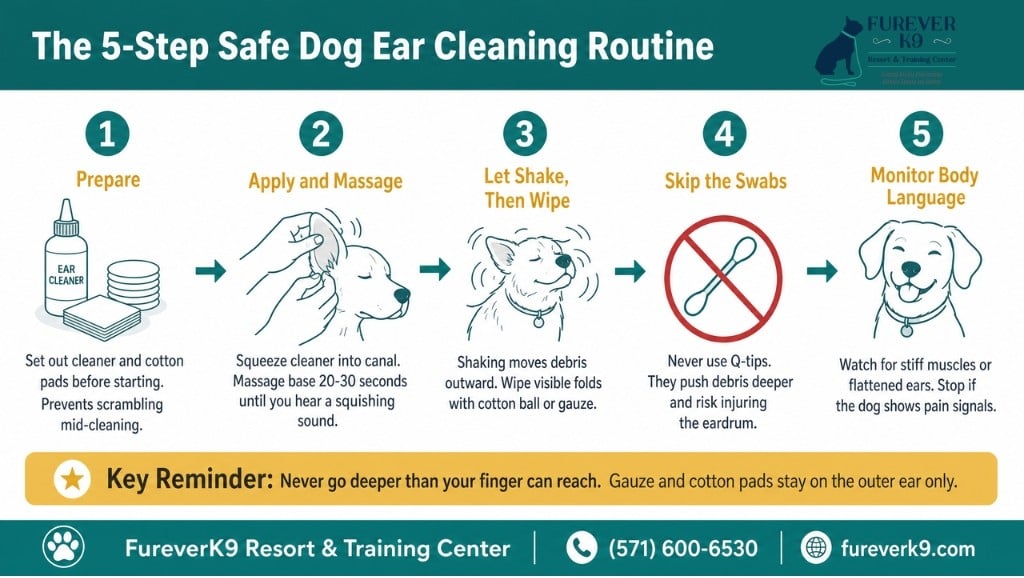
What Are the Safe Steps to Clean Your Dog’s Ears?
Step | Action | Why It Matters |
1. Prepare | Set out cleaner and cotton pads before starting. | Prevents scrambling for supplies mid-cleaning while holding a stressed dog. |
2. Apply & Massage | Squeeze cleaner into the canal and massage the base for 30 seconds. | Loosens debris deep in the horizontal canal where fingers cannot reach. |
3. Shake & Wipe | Let the dog shake its head, then wipe the visible folds. | Shaking moves loosened debris outward for safe, gentle removal. |
4. Skip Swabs | Use only cotton balls or gauze, never cotton swabs. | Protects the eardrum and prevents pushing wax deeper into the canal. |
5. Monitor | Watch for stiff muscles, wide eyes, or flattened ears. | Confirms the dog is relaxed rather than tolerating hidden pain. |
Why Shouldn’t Cotton Swabs Be Used on a Dog’s Ears?
What If Your Dog Won’t Hold Still for Ear Cleaning?
When Should You See a Vet Instead of Cleaning?
- A foul odor coming from the ear canal
- Unusual discharge, whether thick, discolored, or crusty
- Visible redness or swelling inside the ear
- Symptoms that return within days of a cleaning
How Can You Tell If Your Dog’s Ears Hurt Beyond Normal Handling Stress?
FAQs
It depends on ear shape and history. Upright-eared breeds may only need it a few times a year, while floppy-eared or frequently swimming dogs often need it more regularly. Over-cleaning healthy ears can cause irritation, so more is not automatically better. Clean when you notice buildup, not on a rigid schedule.
No. Cotton swabs risk pushing debris deeper into the canal and can injure sensitive tissue. Stick to cotton balls or gauze on the outer ear only.
Start far below the point of stress: brief head and ear touches paired with treats, building up slowly to wiping and eventually cleaning solution. If your dog shows real stress signals, ease off rather than pushing through. For dogs with significant resistance, structured desensitization training can help.
That is the sound of the ear cleaning solution moving around and breaking up debris in the horizontal part of the ear canal. It means you are massaging the base of the ear correctly.
Yes. Ear cleaning is included as part of Furever K9’s All-Inclusive Grooming service, alongside bathing, haircuts, nail grinding, and toothbrushing.