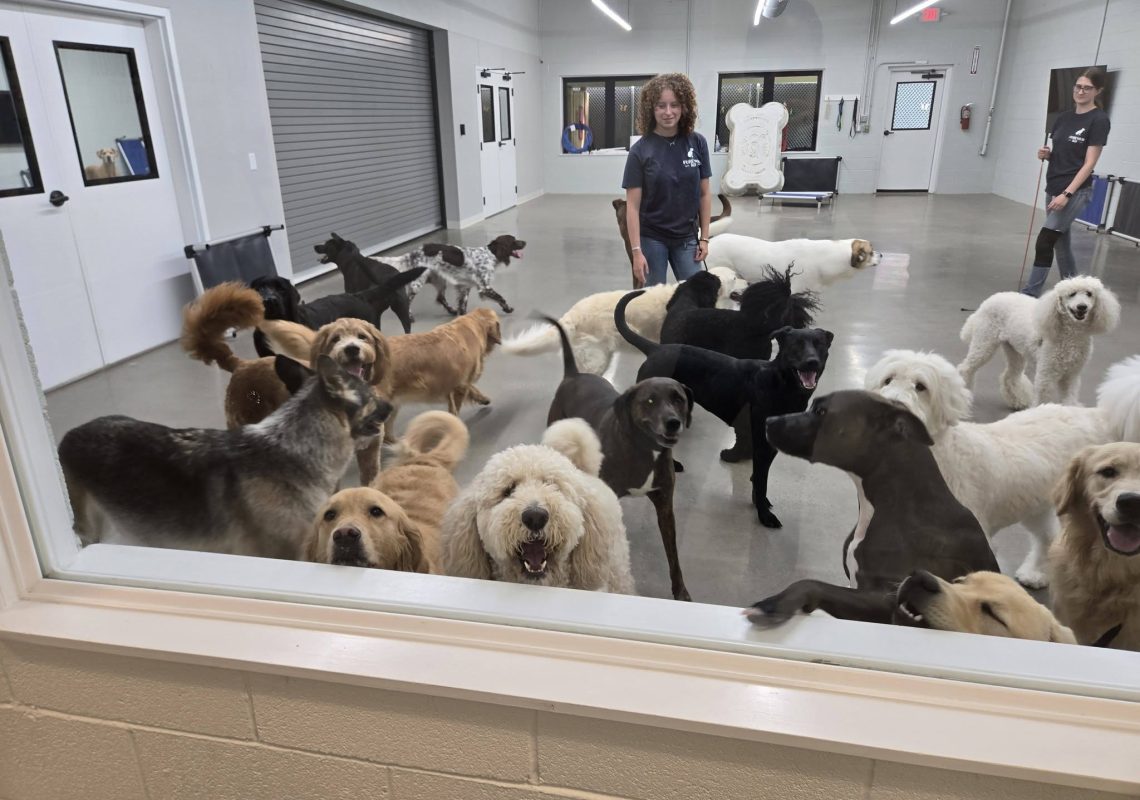
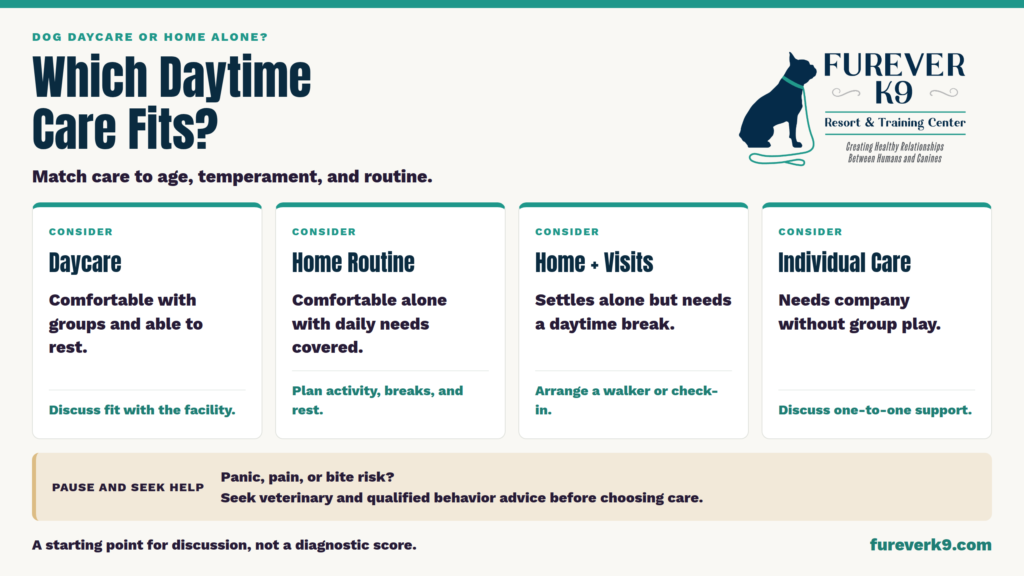
Dog daycare can be a good choice for a dog who enjoys compatible social activity and can settle in a supervised setting. Staying home may be a better fit for a dog who is comfortable alone, prefers a quieter environment, and has their daytime needs covered. Some dogs need a third option, such as a walker, check-in visits, or individual care.
When comparing dog daycare vs. home alone, start with your dog’s actual experience. How do they spend time when you’re out? Do they enjoy being around other dogs? Can your schedule cover their bathroom breaks, activity, and rest?
For Leesburg and Loudoun County families, the answer may differ between a short errand and a day that includes work, commuting, and evening commitments. At Furever K9, we want you to choose care that suits your dog, not feel that every dog needs the same routine.
Is Dog Daycare Better Than Leaving Your Dog Home Alone?
Neither option is automatically better. The right choice depends on your dog’s comfort with being alone, social preferences, health, and the length and predictability of your absence.
A dog who rests comfortably at home and receives appropriate breaks does not need group play simply because you’re going to work. Equally, a dog who needs company or more frequent care should not be expected to manage a long absence just because that is the household’s usual schedule.
It also isn’t a strict choice between all-day daycare and no help. A quieter home routine with a walker or sitter may cover the gap without putting your dog in a group they don’t enjoy. Blue Cross identifies these as alternatives when daycare is unsuitable or impractical.
What Should You Check Before Choosing Your Dog’s Daytime Care?
Check age and health, social preference, ability to rest, actual time alone, and the support your routine provides. Use the questions below to identify unmet needs, not to give your dog a score or make a diagnosis.
1. Age and Health: What Care Does Your Dog Need Now?
Ask whether your dog needs help during the day with toileting, meals, medication, mobility, or recovery. A plan that worked earlier in their life may need adjusting.
For puppies, consider both care needs and readiness for time alone. Young dogs are still learning how to cope with separation, and they may need more daytime support than an adult. VCA recommends considering company through a walker or suitable daycare during longer absences, while involving a veterinarian if the puppy shows separation-related distress.
That does not mean daycare is the default for every puppy. Ask the facility about age and health requirements, and discuss appropriate exposure with your veterinarian. Busy group settings can be overwhelming for some young or shy dogs, and daycare is not a replacement for the broader experiences involved in puppy socialization.
For adult dogs, look at the individual rather than the age label. An adult who settles at home may benefit most from a reliable break during your absence. Another may enjoy suitable daycare but still need a routine that allows rest.
For senior dogs, consider mobility and comfort alongside social interest. Blue Cross advises looking at health conditions such as arthritis and whether the daycare environment can accommodate a less mobile dog. A quieter arrangement with individual support may be worth discussing.
New accidents or a sudden difficulty coping alone deserve veterinary attention. The ASPCA notes that medical problems can cause house soiling, so it should not automatically be labeled a training issue or separation anxiety.
2. Temperament: Does Your Dog Enjoy This Kind of Company?
Ask what your dog enjoys, not just whether they have ever played with another dog. Do they seek comfortable interaction with several dogs, prefer one familiar companion, or mainly want human company?
Blue Cross emphasizes that not all dogs enjoy daycare. Personality, health, and behavior around other dogs can make a group setting more or less suitable.
A dog who prefers people is not failing at being social. A walker or individual sitter may provide company without asking that dog to spend the day in a playgroup.
Tell any prospective carer about fear, defensive behavior, guarding, or difficult interactions. Do not use a daycare day as an experiment to see whether repeated exposure will make those concerns disappear.
3. Rest: Can Your Dog Relax in the Proposed Setting?
Ask whether your dog can settle between activities and what happens when they need space. A useful day should allow rest, not simply keep the dog busy until pickup.
Blue Cross recommends asking how daycare provides downtime and how staff intervene when a dog looks uncomfortable. Those questions matter even for an enthusiastic dog who loves to play.
At home, consider whether your dog has a comfortable, safe place to rest and whether anything in the environment seems to keep them alert or unsettled. At daycare, ask about the actual rest arrangements rather than assuming every provider follows the same schedule.
4. Time Alone: What Happens After You Leave?
Look at your dog’s behavior during your absence, not just the greeting when you return. The RSPCA recommends camera monitoring because signs of distress can be easy to miss.
Notice whether your dog settles, changes resting positions, and spends periods relaxed. Also watch for persistent pacing, vocalizing, panting, repeated escape attempts, or other patterns that suggest they are struggling. Share concerning footage with your veterinarian or a qualified behavior professional.
One bark, chewed item, or accident does not establish separation anxiety. The ASPCA explains that similar behaviors can have other causes, including medical problems and ordinary house-training or chewing issues.
Do not deliberately extend an absence to see how much distress your dog can tolerate. If you already know they panic when left, arrange appropriate support and seek help with an individualized plan.
5. Routine: Can You Reliably Cover the Care Gaps?
Count the whole absence, including travel and likely delays. Then identify who can provide the care your dog needs before you get home.
For a household commuting from Leesburg, the relevant question is not just “How long is my workd
ay?” It is “When will my dog next have appropriate company, a bathroom opportunity, or necessary care?”
Write down the coverage you can actually rely on. A vague plan to pop home is different from a confirmed visit. If you choose daycare, its arrival and pickup windows also need to fit your schedule.
Keep a backup contact for delays or a cancelled visit. The aim is a workable routine, not a plan that depends on every day going perfectly.