

Dog daycare focuses on daytime care, activity, and social time for dogs who are comfortable in that setting. Day training focuses on teaching specific skills with a trainer, along with guidance to help you practice those skills at home.
If you’re comparing dog daycare vs. day training, start with what you need the day to accomplish. Do you want suitable care while you’re busy, help with a particular training goal, or both?
At Furever K9 Resort & Training Center in Leesburg, we offer both services. Understanding their different purposes can help you choose a useful next step for your dog and your household.
What Is the Difference Between Dog Daycare and Day Training?
The main difference is the purpose: daycare provides care and activity, while day training follows a plan for teaching your dog. A dog can have an enjoyable daycare day without having worked on a specific training goal.
For example, supervised social time is not the same as a lesson on walking with a loose leash. A daycare team may support familiar manners during daily interactions, but that does not automatically mean your dog is receiving an individualized training program.
Day training starts with something you want to improve. That might be a calmer greeting, more responsive leash walking, or settling when asked. You and the trainer should agree on what the goal looks like and how progress will be described.
Service names vary between providers. When you see “day school,” “day training,” or “training daycare,” ask what is actually included rather than choosing by the label alone.
Which Option Matches Your Dog’s Goal?
Choose by the job you need the service to do, then check whether the environment is suitable for your dog. Neither option is automatically better for every dog or family.
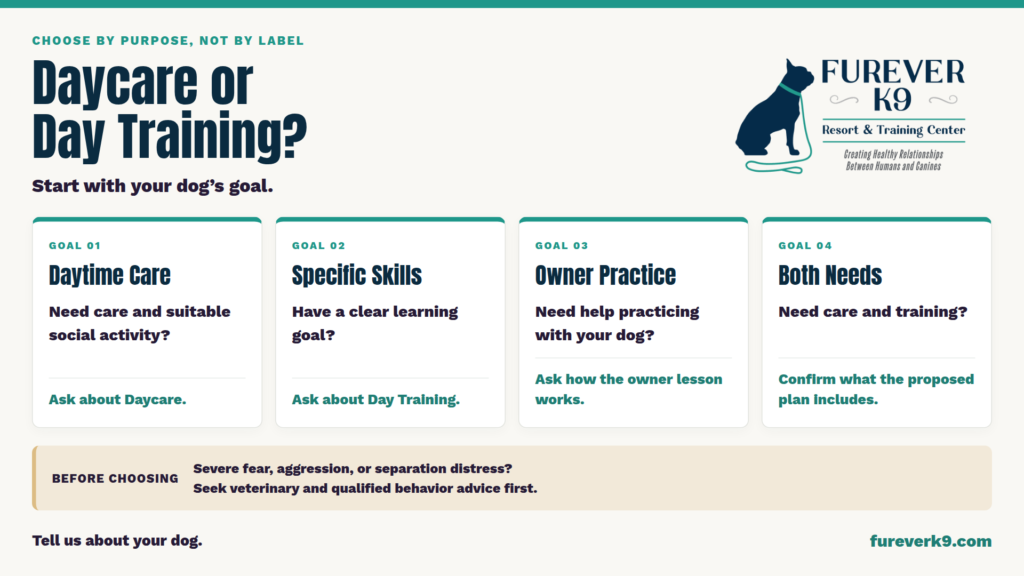
Use these four questions as a starting point:
1. Is your main need daytime care and appropriate social activity? Ask about daycare. Discuss how your dog responds to other dogs, unfamiliar people, and changes in routine before booking.
2. Is there a specific skill you want your dog to learn? Ask about day training. Describe the situation where you need help, such as keeping four paws on the floor during greetings, rather than asking only for “better behavior.”
3. Do you need help practicing with your dog yourself? Ask how owner instruction works. At Furever K9, the published Day Training description includes an owner practice lesson at the end of the package.
4. Do you need both care and training? Explain both needs at the evaluation. Ask what the proposed plan covers, and do not assume that a daycare reservation includes training or that a training day includes group play.
If your dog shows severe fear, separation-related distress, or aggression, get appropriate professional advice before selecting either environment. A care arrangement and a behavior-treatment plan are different things.
What Does Day Training or Daycare Involve at Furever K9?
Our Day Training is built around your training needs, while our daycare offers reserved attendance with a consistent small group. The evaluation helps us discuss the service, schedule, and suitability for your dog.
Day Training: A Plan, Daily Feedback, and Owner Practice
With Day Training in Leesburg, you drop your dog off in the morning and pick them up at the end of the day. Your dog returns home with you each evening.
Before starting, you complete a questionnaire about your dog and what you want to work on. We use that information to build the training plan. The schedule and cost depend on your dog’s needs and are discussed at the evaluation.
At pickup, you receive a daily report card explaining what your dog worked on and how it went. We also asks owners to come in for a lesson at the end of the Day Training package so they can practice with their dog.
Ask about that lesson’s format and the practice you should do between visits. A report card helps you understand the day; hands-on practice helps you understand what to do next.
Daycare: Reserved Care With a Familiar Group
Our dog daycare in Leesburg provides play and exercise with the same small group of dogs and the same staff each time. Attendance is by reservation, you pay for the days your dog attends, and we do not take walk-ins.
Dogs have a behavioral evaluation before attending daycare unless they have already trained with us. Current or former training clients can use their client account to sign up, as explained on the daycare page.
Before booking, confirm current availability, drop-off and pickup windows, and required health records. If your dog’s health, behavior, or care needs have changed, tell us so we can discuss the right next step.
How Should You Compare Play, Rest, and Learning?
Ask how activity and rest are managed in either service, not just how busy the day will be. Coming home tired does not tell you whether your dog practiced a skill or felt comfortable in the environment.
Animal-welfare organization Blue Cross notes that not every dog enjoys daycare and that busy settings can be overwhelming for some dogs. Its guidance emphasizes downtime, supervised interaction, and recognizing discomfort before it escalates.
For daycare, ask how staff select play partners, provide breaks, and respond when a dog wants space. For day training, ask how teaching sessions are balanced with rest and other activities, and whether any social time is appropriate for your dog.
How Can You Measure Progress and Practice at Home?
For training, look for a change you can describe and observe, not just a general statement that your dog did well. For daycare, ask about your dog’s comfort and participation rather than treating attendance as a training milestone.
A practical training goal might be “walking beside me with less leash tension on a quiet route” or “greeting a familiar visitor with paws on the floor.” These are examples of goals to discuss, not promises about what a particular package will achieve.
The American Veterinary Society of Animal Behavior recommends reward-based training that teaches dogs what to do rather than relying on punishment for unwanted behavior. When comparing programs, ask how the trainer will teach the desired skill and show you how to support it.
A Useful Progress-Discussion Checklist
You can use the following questions when reviewing a training update. This is an owner checklist, not a copy of Furever K9’s report card:
- Goal: What skill did my dog practice?
- Setting: Where did they practice, and what distractions were present?
- Support: What cue, reward, or other help did they need?
- Comfort: Did they remain comfortable and engaged, or did the task need to be made easier?
- Next step: What should I practice at home, and when should I ask for help?
Your home practice should connect the lesson to the situations that matter to you. Ask the trainer to demonstrate an exercise, then practice it yourself while they can give feedback. Agree on the cues and rewards your household will use.
Keep the plan manageable. If an exercise becomes difficult at home, describe what happened and ask how to adjust it rather than assuming your dog has forgotten everything or refusing to try.
What Should You Ask Before Booking?
Ask for a clear description of the service, the schedule, and your responsibilities before committing. These questions can help Loudoun County owners compare options without confusing care with training:
- What is the main purpose of my dog’s day, and what is included in the price?
- Which attendance days and drop-off and pickup times apply to this service?
- What evaluation and health records does my dog need?
- How are play, rest, and individual needs managed?
- What feedback will I receive, and what owner instruction or follow-up is included?
- If the setting or plan is not working for my dog, how will we discuss an adjustment?
For Day Training, agree on the learning goals and home-practice expectations. For daycare, confirm fit and reservations rather than assuming there will be a training curriculum.
When Should You Seek Professional Help Before Choosing Either Service?
Seek veterinary and qualified behavior advice if your dog has suspected pain, a sudden behavior change, serious aggression, or severe distress when separated from you. Choosing a busier day is not a substitute for understanding those concerns.
AVSAB recommends veterinary evaluation and a treatment plan for serious concerns such as aggression, anxiety, and fear. The ASPCA also explains that moderate or severe separation anxiety needs a carefully structured behavior plan and experienced professional guidance.
Daycare may sometimes be considered as part of a wider care arrangement, if the setting suits the dog. That does not make it treatment for separation anxiety, and Day Training should not be assumed to provide clinical behavior treatment either.
What Is the Next Step for Your Dog?
Start with the outcome you need: suitable daytime care, a specific learning goal, or support practicing with your dog. Then choose the service whose purpose and environment match those needs.
If you’re weighing Day Training against daycare in Leesburg or the surrounding Loudoun County area, tell the Furever K9 team about your dog. Share what your dog’s day looks like and what you would like to improve, and we can discuss an evaluation and the options that may fit.
FAQs
Puppy eligibility depends on the program, health requirements, and the individual puppy’s readiness. Ask us about the current requirements and speak with your veterinarian about appropriate exposure to other dogs.
Yes, Furever K9 daycare is by reservation and does not accept walk-ins. Current or former training clients can follow the booking instructions on our daycare page.
Do not assume that group play is included in a training day. Ask what activities are part of your dog’s proposed plan and how staff decide whether social interaction is appropriate.
Furever K9 discusses the Day Training schedule at the evaluation because the plan depends on your dog’s needs. Ask about attendance, review points, and the owner practice lesson before booking.
You need current quotes to compare the cost because the services are priced for different purposes. Furever K9 daycare is paid per attendance day, while Day Training pricing depends on the plan discussed at the evaluation.