
Dog Brushing Guide for Every Coat Type
Author picture

Dog Brushing Guide for Every Coat Type: Tools, Frequency, and Safe Techniques for Virginia Owners

Learn how to brush your dog based on coat type. This practical Northern Virginia guide covers safe tools, brushing frequency, mat prevention, and when to call a professional groomer.

Match the Brush to the Coat

 
  • Start with coat structure, not a trendy tool. Hair length, density, texture, and the presence of an undercoat determine what will be comfortable and effective.
  • Short coats need light, regular maintenance. A rubber brush, grooming mitt, or soft bristle brush usually removes loose hair and debris without pulling.
  • Long, silky, curly, and wavy coats need frequent checks. Tangles often begin behind the ears, under the front legs, and along the rear legs.
  • Double coats require patience. Work in small sections and remove loose undercoat gently without aggressively raking the skin.
  • Never cut mats out with scissors. Tight or extensive mats can pull on the skin and should be handled by a professional groomer or veterinarian.
  • Keep the process positive. Short, reward-based sessions are safer and more productive than restraining a dog through a stressful grooming session.
For Northern Virginia dog owners, brushing is more than a way to control hair around the house. It is a simple, repeatable opportunity to inspect your dog’s coat, notice skin changes, remove debris after a trail walk, and help grooming feel predictable rather than stressful. The right routine looks different for a smooth-coated Beagle, a double-coated Golden Retriever, a curly Poodle mix, and a long-haired Yorkie.
 
The key is to match the tool and technique to the individual dog in front of you. A brush that works well on one coat can tug, miss loose undercoat, or create frustration on another. This guide focuses on safe at-home maintenance for families in Leesburg, Ashburn, Purcellville, Broadlands, and surrounding Loudoun County communities.

Why Does Coat Type Matter When Brushing a Dog?

 
Dogs have a wide range of coat characteristics because of selective breeding. Some grow hair continuously, some shed a dense insulating undercoat seasonally, and others have close, smooth fur that needs only light maintenance. , while regular brushing across coat types can remove loose hair, dirt, and dead skin cells and gives owners a chance to notice sore spots or unusual changes.
 
It is helpful to think about four practical questions before you start:
  • Is the coat smooth, dense, double, long, curly, wavy, wiry, or fine and silky?
  • Does your dog have a soft undercoat beneath longer guard hairs?
  • Are there tangles in high-friction areas, such as behind the ears or under the front legs?
  • Is your dog comfortable with being touched and brushed today?
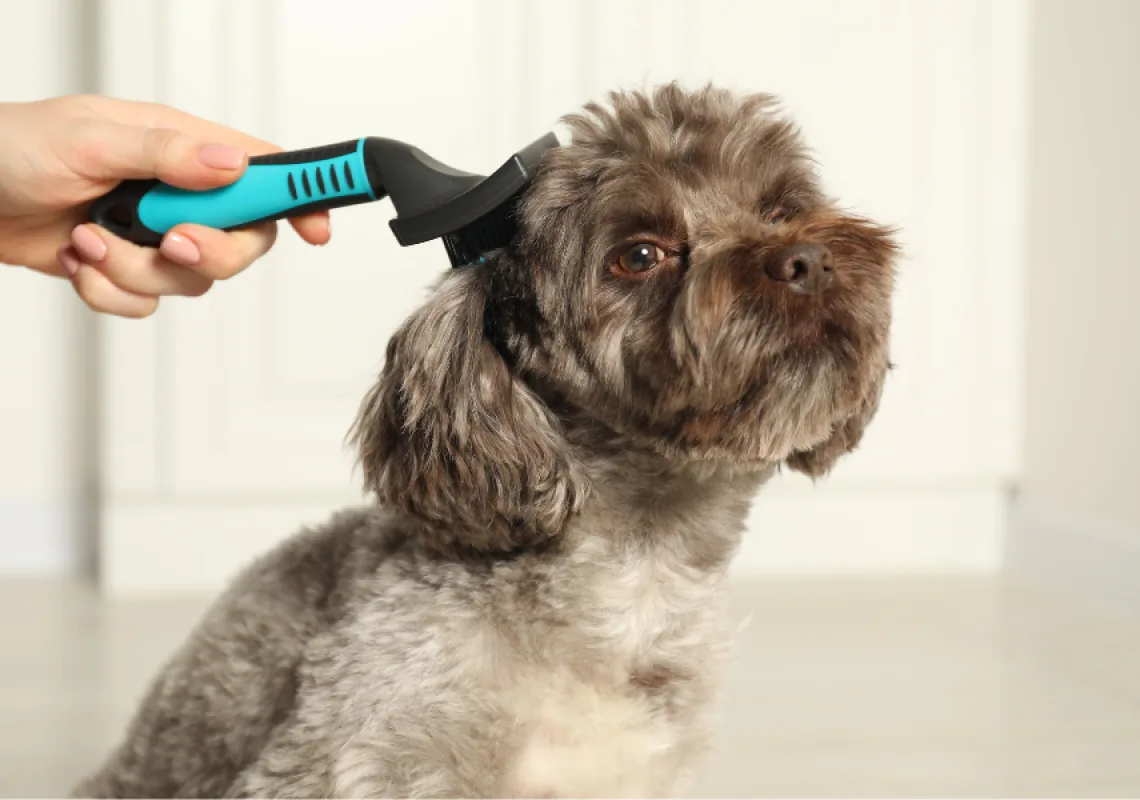
A dog’s breed can offer a starting clue, but mixed-breed dogs often have a combination of coat traits. Look and feel rather than relying on a breed label alone.

Which Dog Brush Works Best for Each Coat Type?

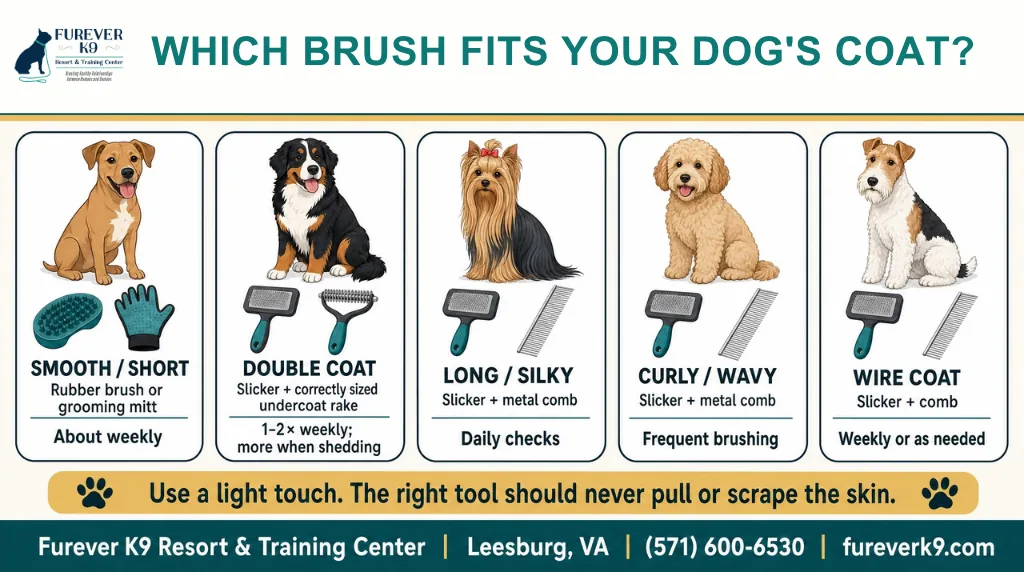
The following table gives a practical starting point. A groomer or veterinarian can help refine the tool choice for dogs with sensitive skin, unusual coat texture, or existing matting.
 
Coat Type
Common Examples
Useful Tools
Main Goal
Starting Frequency
Smooth or short
Boxer, Beagle, short-coated Chihuahua
Rubber brush, grooming mitt, soft bristle brush
Lift loose hair and surface debris
About weekly
Short, dense or double
Labrador Retriever, German Shepherd, Husky
Slicker brush, undercoat rake sized for the coat, comb, bristle finishing brush
Remove loose undercoat gently and inspect the skin
Once or twice weekly; more during shedding
Long or silky
Yorkshire Terrier, Afghan Hound, Lhasa Apso
Slicker brush, pin brush for finishing, metal comb
Prevent tangles before they become mats
Daily checks; frequent brushing
Curly or wavy
Poodle, Bichon, many Poodle mixes
Slicker brush and metal comb
Reach through curls and detect hidden knots
Daily to several times weekly, depending on coat length
Wire-coated
Wire Fox Terrier, Schnauzer
Slicker brush, comb, suitable bristle brush
Remove debris and manage tangles without rough pulling
Weekly or as the coat requires
 
The confirms that slicker brushes are useful for medium, long, wire, and curly coats when used with a light touch; rubber brushes are a good fit for short coats; and undercoat rakes should be matched to a double coat’s length. The brush is only part of the answer. Gentle handling and short sessions matter just as much.

How Should You Brush a Smooth or Short Coat?

Smooth coats rarely form the dense mats seen in long-haired dogs, but they still shed, collect dirt, and benefit from routine skin checks. Use a rubber brush, grooming glove, or soft bristle brush and work with the direction of hair growth. The goal is a light, comfortable session, not a deep rake through the coat.  
 
  1. Begin at the shoulder or back, where most dogs are more comfortable with handling.
  2. Use gentle, even strokes to lift loose hair and debris.
  3. Move gradually over the sides, chest, and hindquarters.
  4. Slow down near the belly, tail, and legs, and stop if your dog becomes uncomfortable.
  5. Finish with a soft cloth or bristle brush if you want to remove remaining loose hair and add shine.
The , often starting with a rubber brush and following with bristles. The benefit is not just appearance: routine brushing helps you spot fleas, ticks, rashes, and sensitive areas early.
 

How Do You Brush a Double-Coated Dog Safely?

Double-coated dogs have a weather-resistant outer layer and a softer undercoat. Many German Shepherds, Huskies, retrievers, and similar dogs shed heavily at seasonal transitions. In Northern Virginia, a dog who has been exploring wooded trails, tall grass, or leaf piles also deserves a quick post-outing check for burrs, ticks, and twigs trapped in the coat.
 
Brush in small sections with the direction of hair growth. Use a slicker brush or correctly sized undercoat rake lightly, then check your work with a comb. Do not dig the rake into the coat, make repeated hard passes over the same skin, or pull through resistance. Undercoat tools can irritate or even cut skin when used carelessly.
 
DoAvoid
Work for a few minutes at a time and check skin as you goTrying to remove an entire seasonal shed in one exhausting session
Use a tool designed for the dog’s coat lengthAssuming every “de-shedding” tool is safe for every double coat
Start with the least tangled areas to build tolerancePulling or yanking through packed loose fur
Use a comb to find hidden tangles on the legs, chest, and tailShaving or cutting a double coat at home without professional advice
 If you encounter a tight mat, stop. It can be painful to the dog, and trying to force or cut it out can injure the skin beneath. ; scissors should never be used to cut out mats.
 

What Is the Best Way to Brush Long, Silky, Curly, or Wavy Coats?

Long and curly coats can look tidy on the surface while knots form close to the skin. This is especially common behind the ears, in the armpits, under harness straps, in the groin, and along the rear legs. recommends frequent inspection and notes that long, silky, curly, and wavy coats often need substantially more maintenance than short coats.
 
Use a gentle, section-by-section method often called line brushing:
 
  1. Choose a calm time and begin with a short, easy area, such as the back or shoulder.
  2. Separate a thin layer of hair so you can see close to the skin.
  3. Hold the hair near the skin to reduce tugging, then gently work from the ends of the hair toward the roots on any tangle.
  4. Brush the small section with a light touch, then use a metal comb to confirm it moves through freely.
  5. Continue one thin layer at a time, offering small breaks and rewards.
A slicker brush can be helpful for these coats, but it should not scrape the skin. A metal comb is the final check: if it stops, there is likely a knot that needs slower, gentler work.
 
For a dog with a maintained short clip, the frequency may be lower than for the same dog grown out in a longer style. Your groomer can recommend a realistic schedule for the haircut you choose.

How Can You Make Brushing Less Stressful for Your Dog?

Good brushing is cooperative, not something a dog must simply endure. Begin before the brush touches your dog. Let them see and sniff the tool, briefly touch the shoulder with the back of the brush, offer a reward, and stop. Repeat on another day. Build the duration gradually.
 
If Your Dog Does This
Your Best Response
Leans in, stays loose, or takes treats comfortably
Continue briefly, keeping the session easy and rewarding
Turns their head away or steps back
Give space, reduce the intensity, and return to an easier area
Freezes, tries to leave, growls, or snaps
Stop the session and seek guidance before trying again
Shows sudden sensitivity in one area
Do not work through it; contact your veterinarian if pain or a skin issue is possible
emphasizes starting slowly, brushing gently, using appropriate tools, and stopping when a dog appears stressed. For a dog who already fears the brush, start with the cooperative-care principles in Furever K9’s article on . A calm, gradual approach protects the coat and the dog’s trust.
 

When Is It Time to Call a Professional Groomer or Veterinarian?

At-home brushing is excellent preventive care, but it cannot solve every coat or skin problem. Book professional grooming support when mats are tight or widespread, your dog needs regular haircuts, the coat is heavily packed with shedding undercoat, or you are unsure which tools are safe. 
 
At Furever K9, is available for standalone appointments and for boarding or daycare clients.
 
Contact your veterinarian promptly for red, swollen, oozing, or painful skin; marked hair loss; persistent itching; a strong odor; or a sudden change in your dog’s coat condition. These signs can have many causes and need a veterinary assessment rather than another grooming product. If your dog needs help tolerating handling, Furever K9’s can also support practical skills that make daily care less overwhelming.
 

The Right Brushing Routine Starts With Observation

The best brush is not the most expensive one or the tool that worked for a friend’s dog. It is the tool that matches your dog’s coat, is used gently, and fits into a routine your dog can handle. Inspect often, keep sessions short, and address tangles when they are small.
 
For dog owners throughout Leesburg and Loudoun County, that routine can make home care simpler while helping you notice when it is time to bring in a professional. For coordinated care between home maintenance and a grooming appointment, read Furever K9’s guide to , or contact at (571) 600-6530.

FAQs

It depends on the coat. Smooth short coats often need a light weekly brush, while long, silky, curly, or wavy coats may need daily checks and frequent brushing. Double-coated dogs usually need more brushing during heavy shedding periods.

A rubber brush, grooming mitt, or soft bristle brush is usually a good choice for a smooth, short coat. Use light strokes in the direction the hair grows and do not over-brush sensitive skin.

An undercoat rake can help remove loose undercoat when it is the correct length for the dog’s coat and used gently. It is not required for every dog, and repeated or forceful passes can irritate the skin.

No. Mats can pull the skin upward, making accidental cuts much more likely. Use professional grooming or veterinary help for tight, extensive, or painful mats.

Brushing does not stop normal shedding, but it removes loose hair before it lands in your home and helps you keep the coat clear of debris. Dogs with double coats may still shed heavily during seasonal coat changes.

Share this Success Story!

I know I need help!!!

Let Lauren know what you're struggling with!
She'll get in touch with you to discuss options!