

Why Regular Vet Checkups Matter for Dogs
Author picture

Why Regular Vet Checkups Matter for Dogs

Learn why regular vet checkups for dogs matter, how often to schedule them, what happens at a wellness exam, and how Leesburg and Northern Virginia owners can prepare.

Why Routine Veterinary Care Matters

  • Wellness care is preventive care. Routine exams help a veterinarian track changes, update prevention plans, and investigate subtle concerns before they become more complicated.
  • There is no one schedule for every dog. Healthy adult dogs commonly need at least an annual visit, while puppies, seniors, and dogs with health conditions may need more frequent appointments.
  • Exams are broader than vaccines. A wellness visit can include a physical exam, weight and body-condition assessment, parasite-prevention discussion, dental review, behavior conversation, and recommended screening tests.
  • Small changes are worth mentioning. Shifts in appetite, thirst, mobility, sleep, behavior, weight, or breath can help your veterinarian decide whether your dog needs earlier attention.
  • FureverK9 supports routines, not diagnosis. Training, grooming, boarding, and daycare can help owners maintain consistent care and notice observable changes, but veterinary professionals diagnose and treat medical conditions.
Regular vet checkups for dogs are one of the most practical ways to protect health before a problem becomes obvious. Dogs cannot explain that a tooth hurts, their joints feel stiff, or they have started drinking more water than usual. Some conditions, including kidney disease, arthritis, diabetes, and dental disease, can begin with changes that are easy to miss at home. , when the veterinary team may have more options for evaluation and care.
 
For dog owners in Leesburg, Loudoun County, and Northern Virginia, the best approach is simple: treat veterinary care as a year-round relationship, not just an emergency service. A regular wellness schedule, good records at home, and prompt communication when something changes create a stronger foundation for every stage of a dog’s life.
 
Important: This article provides general education, not medical advice. Your dog’s veterinarian should set the care schedule, vaccinations, preventive medications, testing, nutrition plan, and treatment recommendations that fit your dog.

Why Do Regular Vet Checkups Matter for Dogs?

Routine exams create a baseline. When your veterinarian sees your dog consistently, it becomes easier to compare weight, dental condition, mobility, skin, coat, behavior, and laboratory results over time. That context matters. A small change that seems unimportant on a single day may be more meaningful when it is compared with last year’s health record.
 
The . That does not mean a wellness visit can prevent every disease or guarantee a specific outcome. It means prevention and early evaluation can give you and your veterinarian a better chance to respond thoughtfully instead of waiting for a crisis.
 
What a routine exam supports
Why it matters for your dog
Baseline health tracking
Repeated measurements make it easier to notice shifts in body condition, weight, mobility, and behavior.
Vaccines and parasite prevention
Your veterinarian can tailor prevention to your dog’s age, lifestyle, travel, and local exposure risks.
Dental and ear checks
Problems in the mouth or ears can be uncomfortable before they are obvious to an owner.
Behavior conversations
A change in behavior can relate to training, environment, pain, aging, anxiety, or other health factors.
Personalized recommendations
Breed, life stage, health history, and home routine all affect what your dog needs.
A veterinary exam also gives owners a structured opportunity to ask questions. Is your dog’s nighttime restlessness normal? Is a new limp worth investigating? Has the diet changed enough to affect weight? Does a specific activity need to be modified? It is much easier to ask these questions during a planned appointment than when you are trying to make decisions under pressure.
 

How Often Should a Dog See the Vet?

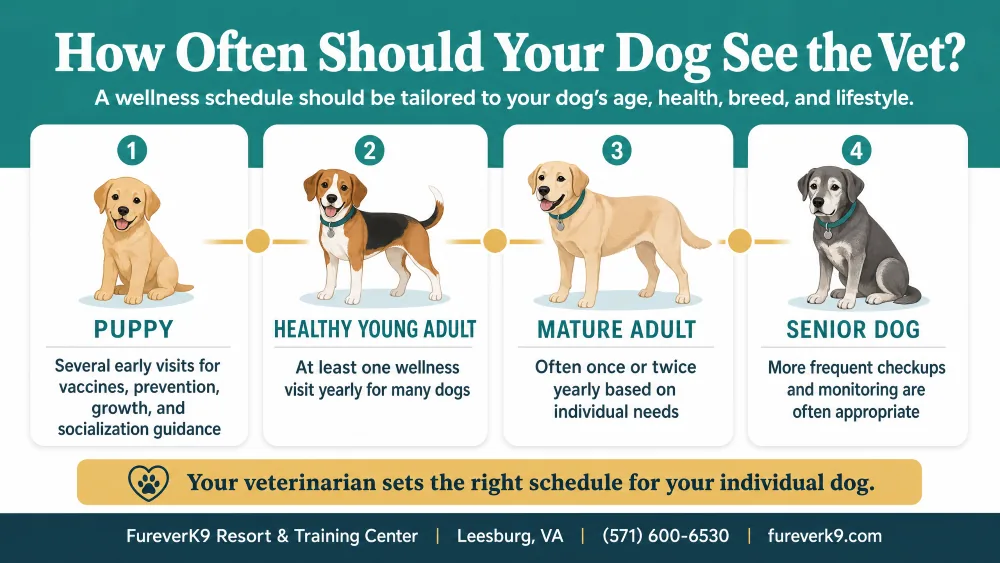
There is no universal schedule. A healthy adult dog may do well with one annual wellness visit, while a puppy, senior, or dog with an ongoing condition may need more frequent care. recommends adjusting the schedule around age, breed, overall health, and individual risk factors.
The table below is a general planning guide, not a substitute for a veterinarian’s recommendation.
 
Life stage or situation
General wellness-care pattern
Topics your veterinarian may discuss
Puppy
Several appointments in early life, often spaced around vaccine and prevention needs
Vaccinations, parasite prevention, nutrition, microchipping, socialization, and safe activity
Healthy young adult
At least annual wellness care for many dogs
Body condition, dental care, behavior, lifestyle risks, vaccines, and prevention
Mature adult
Often once or twice yearly, depending on individual needs
Weight changes, mobility, screening tests, dental health, and age-related risks
Senior dog
More frequent visits are often appropriate
Pain, mobility, cognitive changes, laboratory testing, diet, and quality of life
Chronic condition or new concern
Schedule determined by the veterinarian
Monitoring, medication review, symptom tracking, and individualized testing
Puppies need frequent visits because their physical development, vaccine schedule, and preventive-care needs change quickly. AAHA explains that many puppies begin veterinary care at six to eight weeks and commonly return every three to four weeks until they complete their early schedule. Senior dogs often benefit from more frequent monitoring because health conditions and mobility changes can develop more quickly later in life.
 

What Happens During an Annual Dog Wellness Exam?

A thorough wellness exam is more than a quick check-in. The exact process varies by clinic and dog, but an appointment often begins with your observations at home. Your veterinarian may ask about appetite, water intake, bathroom habits, activity level, sleep, medications, travel, parasite prevention, diet, and changes in behavior.
 
The physical examination typically includes an assessment of the dog’s body weight and body condition, heart and lungs, eyes, ears, mouth and gums, skin and coat, abdomen, joints, gait, and overall comfort. Depending on life stage and medical history, the veterinarian may recommend blood work, urine testing, fecal testing, imaging, or other screening. .
 

What Should You Bring to Your Dog’s Vet Appointment?

Owners can make the appointment more useful by bringing a short written note or phone list. It is easy to forget details when you are in the exam room, particularly if your dog is excited or anxious.
 
Bring or prepare
Why it helps
Medication and supplement list
Lets the veterinary team review exact products, amounts, and timing.
Diet details
Supports an informed conversation about calories, treats, appetite, and body condition.
Recent changes you have noticed
Helps identify patterns in mobility, energy, sleep, thirst, appetite, or behavior.
Short videos, if safe to obtain
Can show an intermittent limp, cough, unusual gait, or behavior that may not appear in the clinic.
Training and lifestyle questions
Allows the veterinarian to advise on safe activity, handling, travel, and behavioral concerns.
If a dog is nervous about veterinary handling, tell the clinic before the appointment. You may be able to schedule a quieter time, use a familiar mat or treats if medically appropriate, or ask whether the team recommends a gradual handling plan.

Which Changes Should You Mention Before the Next Checkup?

Do not wait for a routine appointment if your dog appears unwell, is in pain, has trouble breathing, collapses, has repeated vomiting or diarrhea, cannot urinate, has a suspected toxin exposure, or shows another urgent concern. Contact your veterinarian or an emergency clinic promptly in those situations.
For less urgent changes, call your veterinary clinic to ask whether your dog should be seen sooner.
 
Changes worth reporting include a new limp, difficulty getting up, unusual fatigue, changes in drinking or urination, persistent bad breath, a decrease in appetite, unexplained weight change, altered sleep, increased irritability, or a new reluctance to be touched. These signs do not diagnose a condition by themselves, but they give the veterinary team useful information.
 
This is also where the owner’s daily observations are most valuable. A dog can look relatively normal during a short appointment, while you may have noticed a pattern across several weeks. Keep brief notes that include when the change began, how often it occurs, and whether it is getting better, worse, or staying the same.
 

How Do Routine Care, Grooming, Training, and Veterinary Visits Work Together?

Preventive care works best when each part of your dog’s life supports the others. The veterinarian provides medical assessment and treatment. The owner keeps routines and shares observations. A trainer or groomer can help a dog become more comfortable with everyday handling, but they do not replace veterinary care.
 
For example, regular at-home brushing and a professional groomer’s observation may help owners notice a skin issue, ear odor, or dental buildup. However, a veterinarian must determine whether that finding needs diagnosis or treatment. FureverK9’s guide to and its article on can help with day-to-day care between wellness visits, but they are not substitutes for a clinical exam.
 
Likewise, training can make examinations less stressful. Dogs who have practiced standing on a mat, accepting gentle handling, wearing a basket muzzle when appropriate, or relaxing around unfamiliar people may cope more easily with routine care. FureverK9’s can help owners build practical handling and cooperative-care foundations.
 

Does Boarding or Daycare Replace a Veterinary Checkup?

No. Boarding and daycare are not medical services and cannot diagnose disease. FureverK9 requires a behavioral evaluation for boarding and daycare so the team can promote a safe, comfortable fit, and its services page describes a structured environment designed to support physical and mental stimulation. If an owner or care team observes an important change in energy, appetite, mobility, or behavior, the appropriate next step is to share that observation with the dog’s veterinarian.
 

How Can Northern Virginia Owners Keep Preventive Care on Track?

Loudoun County and Northern Virginia dog owners often juggle commutes, school schedules, travel, changing weather, and active weekends. A simple annual system can make preventive care easier to maintain. Schedule the next wellness visit before leaving the current one, add parasite-prevention reminders to your calendar, keep vaccination records in one digital folder, and make a short note whenever you notice a possible health trend.
 
It can also help to coordinate routine handling practices with your veterinary calendar. If your dog needs help becoming comfortable with brushing, nail care, ear handling, or being on a mat, start before the next appointment rather than the night before it. FureverK9’s include routine care options, while its training programs can support the calm handling skills that make day-to-day care easier.
 

Prevention Is a Year-Round Habit

The best time to establish a wellness routine is before something feels wrong. Regular vet checkups give your veterinarian an ongoing picture of your dog’s health, while everyday observations at home provide the detail that helps identify changes early. Together, those habits create a thoughtful, personalized care plan through puppyhood, adulthood, and the senior years.
 
FureverK9 Resort & Training Center in Leesburg supports dogs and owners throughout Loudoun County, Northern Virginia, and Metro DC with structured training, grooming, boarding, and daycare. To discuss a program that supports your dog’s everyday routines, call (571) 600-6530 or use the .

FAQs

Many healthy adult dogs need at least one wellness visit per year. Some dogs may benefit from twice-yearly visits based on age, breed, lifestyle, and individual risk factors, so ask your veterinarian for the right schedule.

Often, yes. Older dogs can benefit from more frequent wellness visits and screening because changes in mobility, cognition, organ function, and comfort may emerge more quickly with age.

A wellness exam is a preventive appointment for a dog who appears generally well. A sick visit addresses a current concern, such as vomiting, lameness, pain, appetite change, or behavior change, and may require more focused testing or treatment.

Ask about body condition, dental health, vaccines, parasite prevention, nutrition, activity level, behavior, and any changes you have observed at home. It is also useful to ask what signs should prompt an earlier appointment.

Yes. Training can build comfort with handling, mats, grooming tools, and routines that are useful for everyday care. FureverK9 can help determine whether private lessons, day training, Board & Train, or another service fits your dog’s needs.`

Share this Success Story!

I know I need help!!!

Let Lauren know what you're struggling with!
She'll get in touch with you to discuss options!