


How to Stop Dog Lunging: Proven Training Methods That Work
Dog lunging behavior can be a significant challenge for pet owners, often leading to stressful situations during walks. Understanding the underlying causes of this behavior is crucial for effective training. This comprehensive guide explores expert techniques to manage and modify lunging behavior in dogs, focusing on positive reinforcement and structured training plans grounded in proven dog psychology.
Many dog owners struggle with leash reactivity, which can stem from various triggers, including environmental distractions and fear responses. By implementing the right strategies, you can help your dog overcome lunging behavior and enjoy more peaceful walks. We will cover the causes of lunging, effective training techniques, recommended tools, safety measures, and how to find professional trainers in your area.
What Causes Dog Lunging Behavior and How Can It Be Identified?
Dog lunging behavior is often a reaction to specific triggers that provoke a strong response. Understanding these triggers is essential for effective training. Lunging can be identified through specific signs that differentiate it from aggression, allowing owners to respond appropriately.
Research in applied animal behavior management employs a diagnostic and treatment approach for unwanted pet behavior that incorporates ethology-based causal factors. As in behavior therapy for humans, behavioral assessment includes descriptive functional analysis to determine relevant contingency variables, considered in the context of appropriate motivational classification, such as social or prey-directed motivation or fear-motivated responses. Treatments are then designed accordingly
Response Cost in the Treatment of Lunging in Dogs, 2003
Which Triggers Lead to Reactive Dog Lunging on Leash?
Common triggers for reactive dog lunging include encounters with wildlife, busy sidewalks filled with distractions, and neighborhood noises that provoke anxiety. For instance, a dog may lunge at a squirrel or another dog, perceiving them as threats or objects of interest. Recognizing these triggers helps owners anticipate and manage their dog’s reactions, leading to more effective training outcomes.
How to Recognize Signs of Lunging Versus Aggression in Dogs
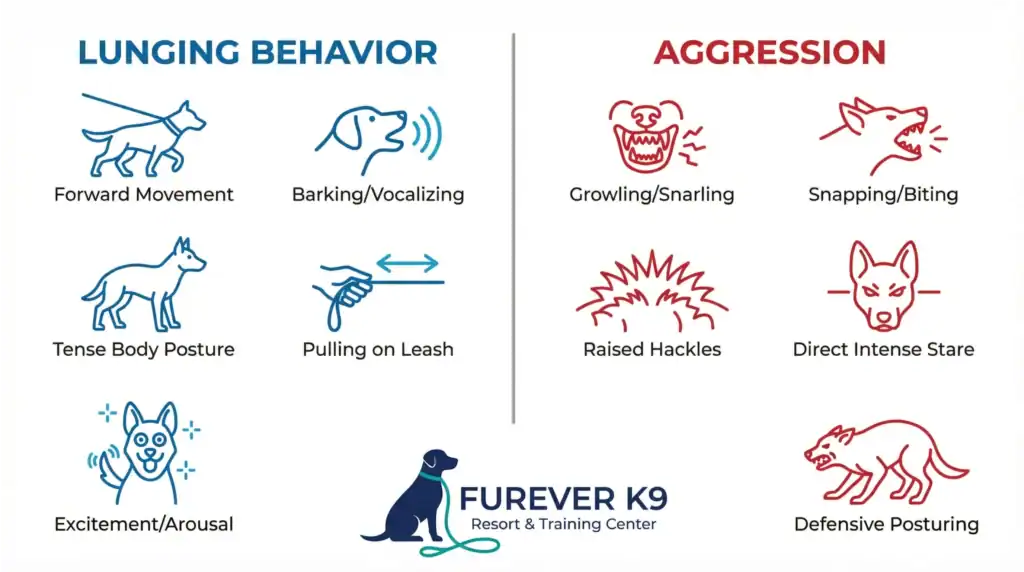
Distinguishing between lunging behavior and aggression is crucial for dog owners. Behavioral signs of lunging often include barking, pulling on the leash, and a tense body posture, while aggression may manifest as growling, snarling, or snapping. Understanding the context of these behaviors is vital; for example, a dog may lunge out of excitement rather than aggression. By observing body language and situational factors, owners can better interpret their dog’s actions and respond appropriately.
| Behavioral Sign | Lunging Behavior | Aggressive Behavior | How to Respond |
|---|---|---|---|
| Body Language | Forward movement, tense but not stiff, may wag tail | Stiff body, raised hackles, lowered head | Lunging: Redirect attention. Aggression: Create distance immediately. |
| Vocalizations | Barking, whining, excited sounds | Growling, snarling, low rumbling | Lunging: Reward quiet behavior. Aggression: Consult a professional trainer. |
| Eye Contact | Brief glances, may look away | Direct, intense stare (“hard eyes”) | Lunging: Practice “look at me” cues. Aggression: Avoid direct eye contact. |
| Leash Behavior | Pulling hard, jumping forward | Pulling with rigid body, may freeze first | Lunging: Stop and wait for calm. Aggression: Increase distance immediately. |
| Overall Energy | Excited, aroused, reactive | Tense, defensive, threatening | Lunging: Focus on calm energy training. Aggression: Prioritize safety. |
| Recovery Time | Calms down relatively quickly | Takes longer to settle, may remain vigilant | Lunging: Practice structured calm-down routines. Aggression: Seek professional assessment. |
What Are the Best Reactive Dog Training Techniques to Stop Lunging?
Effective training techniques are essential for managing lunging behavior in dogs. These methods often emphasize positive reinforcement, which can significantly alter a dog’s response to triggers. The most successful approaches combine clear communication, calm leadership, and consistent practice.
How Does Positive Reinforcement Help Modify Lunging Behavior?
Positive reinforcement involves rewarding desired behaviors to encourage their repetition. This technique helps modify lunging behavior by associating calmness and focus with positive outcomes, such as treats or praise. For example, when a dog remains calm in the presence of a trigger, rewarding them reinforces that behavior, making it more likely to occur in the future.
This approach builds trust between the dog and owner, fostering a more positive training environment. Rather than punishing unwanted behavior, positive reinforcement teaches your dog what you want them to do, creating a partnership based on understanding and communication.
What Step-by-Step Training Plans Are Effective for Lunging Dogs?
Implementing structured training plans can effectively address lunging behavior. A typical plan may include the following steps:
Week 1: Desensitization
Gradually expose the dog to triggers at a distance where they remain calm. Start far enough away that your dog notices the trigger but doesn’t react. As your dog becomes comfortable, gradually decrease the distance.
- Daily Practice: 2-3 short sessions (10-15 minutes each)
- Goal: Identify threshold distance for each trigger
- Success Marker: Dog notices trigger but remains calm
Week 2: Counter-Conditioning
Pair the presence of triggers with positive experiences, such as treats or play. When your dog sees the trigger, immediately reward calm behavior. This teaches your dog that the presence of the trigger predicts good things.
- Daily Practice: 2-3 sessions with high-value treats
- Goal: Create positive association with triggers
- Success Marker: Dog looks to you for treats when seeing trigger
Week 3: Leash Training
Teach the dog to walk calmly on a leash, rewarding them for maintaining a loose leash. Practice in low-distraction environments first, then gradually increase difficulty.
- Daily Practice: Every walk becomes training opportunity
- Goal: Loose leash walking in various environments
- Success Marker: Dog walks calmly 70-80% of the time
Week 4: Real-World Application
Practice in increasingly challenging environments, always maintaining your dog’s ability to succeed. Progress at your dog’s pace, not according to a timeline.
- Daily Practice: Gradual exposure to busier environments
- Goal: Generalize calm behavior to real-world settings
- Success Marker: Dog handles moderate distractions calmly
Consistency is key; owners should practice these steps regularly and adjust the plan based on their dog’s progress. This structured approach helps dogs learn to manage their reactions over time. Most dogs show significant improvement within 2-4 weeks of consistent training, though complex cases may require longer-term support.
For personalized guidance on implementing these techniques, consider working with a professional trainer who specializes in behavior modification for reactive dogs.
Which Tools and Equipment Are Recommended for Managing Reactive Dog Lunging?
Using the right tools can enhance training effectiveness and ensure safety during walks. Various equipment options are available to help manage lunging behavior.
Are Head Halters and Harnesses Effective for Controlling Lunging?
Head halters and harnesses can be effective tools for controlling lunging. Head halters work by gently guiding the dog’s head, making it easier to redirect their attention. Harnesses, particularly those designed for no-pull, distribute pressure across the dog’s body, reducing the likelihood of injury during lunging. Both tools can provide owners with better control while training their dogs to walk calmly on a leash.
The effectiveness of various leash equipment in mitigating pulling and lunging has been a subject of ongoing study and debate among experts.
Wynne, C.D.L. Comparing Efficacy and Welfare Impacts of Four Types of Leash Walking Equipment. 2024.
How to Choose the Best Training Equipment for Reactive Dogs?
When selecting training equipment, consider the following factors:
- Fit and Comfort: Ensure the equipment fits properly to avoid discomfort or injury.
- Functionality: Choose tools that effectively address your dog’s specific behavior issues.
- Durability: Opt for high-quality materials that can withstand regular use.
By prioritizing these factors, owners can select the best equipment to support their training efforts and enhance their dog’s walking experience.
How Can Safety Be Ensured While Training Dogs to Stop Lunging?
Safety is paramount when training dogs to stop lunging. Implementing specific safety measures can protect both the dog and the owner during training sessions.
What Safety Tips Should Owners Follow During Lunging Behavior Training?
Owners should follow essential safety tips, such as keeping a safe distance from potential triggers and using appropriate equipment. Monitoring the dog’s behavior closely during training is also crucial to prevent any unexpected reactions. Additionally, practicing in controlled environments can help reduce the risk of incidents while the dog learns to manage their lunging behavior.
How to Manage Leash Reactivity Safely in Public Spaces?
Managing leash reactivity in public spaces requires strategic planning. Owners should choose appropriate locations for training, avoiding crowded areas that may overwhelm the dog. Using positive reinforcement techniques in these settings can help the dog associate public outings with positive experiences. Gradually increasing exposure to distractions while maintaining control can lead to successful training outcomes.
Where to Find Professional Dog Lunging Trainers Near Me in Loudoun County and Metro D.C.?
Finding a professional trainer can provide valuable support for managing dog lunging behavior. Local trainers often offer specialized services tailored to reactive dogs.
What Services Does Furever K9, LLC Offer for Reactive Dog Training?
Furever K9 offers board and train and private lessons at its Leesburg facility, with a focus on behavior modification for reactive dogs. Its balanced, relationship-based approach gives dogs clear rewards and fair boundaries in a supportive environment. This personalized attention helps address specific behavioral issues, including lunging, effectively.
Furever K9’s approach is balanced and relationship-based, with a strong focus on owner education, ensuring that dogs learn in a supportive environment. Their philosophy centers on building healthy relationships between humans and canines, recognizing that lasting behavioral change requires addressing both the dog and the owner’s energy and communication style.
Founded by Lauren White, who has 11 years of professional dog training experience and studied at Cesar Millan’s Dog Psychology Center, Furever K9 combines proven dog psychology principles with practical, real-world training methods.
Facility Features:
- 9,500 sq. ft. state-of-the-art training facility
- Low-stress, calm environment designed for anxious dogs
- Experienced, compassionate training staff
- Personalized training plans for each dog
- Regular progress updates and owner coaching
- On-site boarding and daycare available
Schedule a consultation with Furever K9 to receive a customized training plan built around your dog’s specific needs and your family’s goals. During the first session, we assess behavior, identify root causes, and outline clear next steps. This structured, relationship-focused approach ensures your dog receives the guidance and consistency needed for lasting results.
Frequently Asked Questions About Dog Lunging
1. Why does my dog lunge on the leash during walks?
Dogs lunge on leash due to excitement, fear, frustration, prey drive, or leash reactivity. Common triggers include other dogs, wildlife, bicycles, or unfamiliar people. Identifying the trigger and your dog’s threshold is the first step toward correcting the behavior.
2. Is dog lunging the same as aggression?
No. Lunging is often reactive or excitement-based, while aggression typically includes growling, snapping, stiff posture, and prolonged tension. Context and body language determine the difference. If you’re unsure, consult a professional trainer for assessment.
3. How long does it take to stop leash lunging?
With consistent training, many dogs show improvement within 2–4 weeks. More severe reactivity cases may require several months of structured behavior modification and professional guidance.
4. What is the most effective training method to stop dog lunging?
Positive reinforcement combined with desensitization and counter-conditioning is highly effective. Teaching focus cues, rewarding calm behavior, and gradually exposing the dog to triggers helps reshape emotional responses.
5. What equipment works best for dogs that lunge?
Front-clip harnesses and properly introduced head halters provide better control and reduce pulling force. Equipment should support training, not replace it. Proper fit and humane handling are essential.
6. When should I hire a professional trainer for lunging behavior?
If your dog’s lunging escalates, includes aggression, or feels unsafe to manage alone, professional help is recommended. Trainers who specialize in leash reactivity and behavior modification can create structured, personalized plans for lasting results.