

How to Stop Destructive Dog Chewing: Proven Training Techniques That Actually Work
You come home to find your favorite shoes destroyed. Again. The couch cushions have mysterious holes. Your dog greets you with a wagging tail, completely oblivious to the chaos they’ve created. You’ve tried everything—scolding, bitter sprays, hiding your belongings—but the destructive chewing continues.
Here’s what most dog owners don’t realize. Destructive chewing isn’t defiance or spite. It’s communication. Your dog is telling you something important about their emotional state, their needs, or their environment. Until you understand what they’re trying to say, no amount of correction will solve the problem.
At Furever K9 in Leesburg, Virginia, we’ve helped hundreds of frustrated Loudoun County dog owners transform their destructive chewers into well-behaved companions. The solution starts with understanding why your dog chews, not just trying to stop the behavior.
What Causes Destructive Dog Chewing and How Can You Identify It?
Destructive chewing rarely happens in a vacuum. Your dog isn’t randomly choosing to destroy your belongings. They’re responding to specific triggers in their environment or emotional state.
Which Common Factors Lead to Dog Chewing and Damage?
Boredom ranks among the most common causes of destructive chewing. Dogs left alone for extended periods without mental stimulation resort to chewing as entertainment. Your dog isn’t being bad. They’re desperately trying to occupy themselves.
Anxiety and stress drive many destructive behaviors. Dogs experiencing separation anxiety, fear of loud noises, or general stress often chew to self-soothe. The physical act of chewing releases endorphins that temporarily calm anxious dogs.
Lack of training creates confusion about what’s acceptable to chew. Puppies and untrained dogs don’t inherently know that shoes are off-limits while chew toys are fine. Without clear guidance, they make their own choices, often ones you won’t appreciate.
Teething affects puppies between three and six months old. During this developmental stage, puppies experience significant discomfort as adult teeth emerge. Chewing provides relief, making it an irresistible behavior during this period .
How Do You Recognize Signs of Anxiety and Boredom in Dogs?
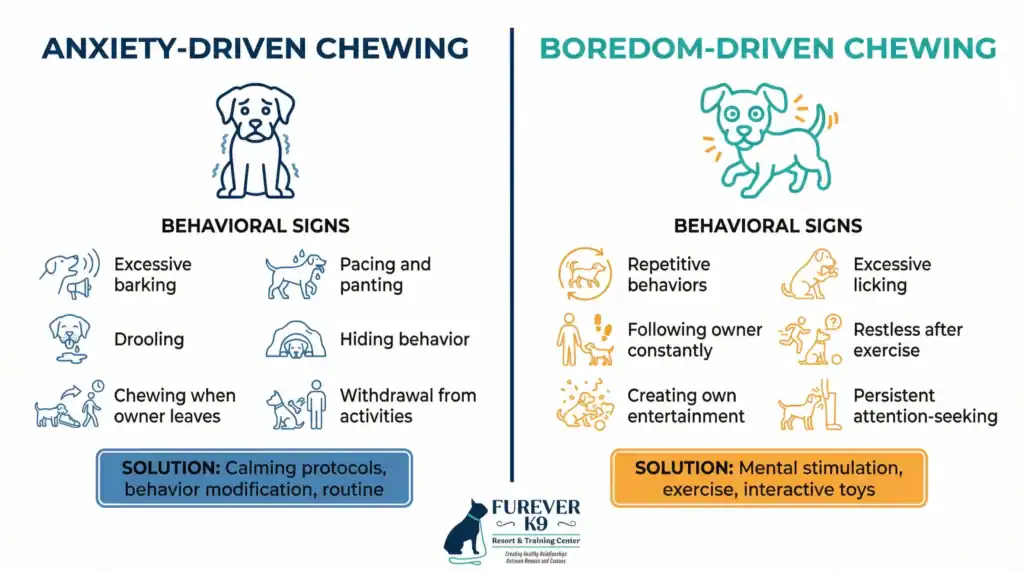
Recognizing anxiety in your dog requires attention to subtle behavioral changes. Common indicators include excessive barking, destructive chewing when you leave, and withdrawal from normal activities. Anxious dogs may pace, pant excessively, drool, or hide even when no obvious threat exists.
Boredom manifests differently. Bored dogs often engage in repetitive behaviors like pacing, excessive licking, or creating their own entertainment through destruction. They may follow you constantly, demand attention persistently, or seem restless even after physical exercise.
Research on function-based interventions for dog mouthing shows that identifying the specific reason behind destructive behaviors is crucial for effective intervention . Without understanding whether your dog chews for attention, anxiety relief, or boredom, you’re treating symptoms instead of causes.
What Are the Most Effective Training Techniques to Stop Dog Chewing?
Training techniques form the foundation of stopping destructive chewing. The right approach addresses both the behavior and its underlying cause.
How Does Positive Reinforcement Reduce Destructive Behaviors?
Positive reinforcement training rewards desired behaviors to encourage repetition. This method builds trust between you and your dog, creating a relationship where your dog wants to make good choices. The American Veterinary Society of Animal Behavior (AVSAB) endorses positive reinforcement as the most humane and effective training method .
When your dog chews an appropriate toy instead of your furniture, immediate praise and rewards strengthen that choice. Your dog learns that chewing the right items brings positive attention and treats. Over time, this association becomes automatic.
At Furever K9, our balanced, relationship-based approach, championed by our founder Lauren White, helps dogs understand what to chew without fear or anxiety.
The key is consistency and timing. Reward your dog within seconds of the desired behavior. If you wait too long, your dog won’t connect the reward with chewing the appropriate item.
What Role Does Crate Training Play in Stopping Chewing?
Crate training provides a safe space that prevents destructive chewing when you can’t supervise. Dogs have a natural denning instinct that makes properly introduced crates feel secure rather than confining.
A crate isn’t punishment. It’s management that sets your dog up for success. When you’re away or busy, the crate prevents your dog from practicing destructive chewing. Each time you prevent the unwanted behavior, you stop it from becoming a stronger habit.
Proper crate training involves gradual introduction with positive associations. Feed meals in the crate, provide special toys only available there, and keep initial durations short. Never use the crate as punishment, or it will lose its effectiveness as a safe space.
Our Board and Train program at Furever K9 incorporates crate training as part of comprehensive behavior modification. Dogs learn to view their crate as a calm, comfortable retreat rather than isolation.
How Can Puppy Teething Be Managed to Prevent Destructive Chewing?
Puppy teething creates intense discomfort that drives chewing behavior. Managing this developmental stage prevents destructive habits from forming during a critical period.
What Safe Chewing Alternatives Work Best for Teething Puppies?
Rubber chew toys designed for teething provide appropriate outlets for your puppy’s need to chew. Look for toys specifically rated for teething puppies, as they offer the right texture and durability.
Frozen treats and toys soothe sore gums while satisfying the urge to chew. Freeze wet washcloths, specially designed teething toys, or puppy-safe frozen treats. The cold numbs discomfort while the texture provides relief.
Variety keeps puppies engaged. Rotate different textures, shapes, and sizes of appropriate chew items. What appeals to your puppy one day might not interest them the next, so having options prevents boredom-driven destruction.
How Do You Support Puppies Through Teething Without Household Damage?
Supporting teething puppies requires proactive management. Remove tempting items from reach during this stage. Your puppy can’t destroy what they can’t access.
Redirect immediately when you catch your puppy chewing something inappropriate. Don’t yell or punish. Simply interrupt calmly, redirect to an appropriate chew toy, and praise when they engage with it.
Establish a routine that includes regular play sessions and training. A tired puppy with a predictable schedule is less likely to seek entertainment through destructive chewing. Our Private Lessons at Furever K9 teach Northern Virginia families how to create puppy schedules that prevent problem behaviors before they start.
What Environmental Changes Help Reduce Chewing from Anxiety and Boredom?
Environmental enrichment addresses the root causes of destructive chewing by reducing anxiety and eliminating boredom.
Which Activities and Toys Promote Healthy Dog Behavior?
Interactive toys that dispense treats provide mental stimulation that tires dogs more effectively than physical exercise alone. Puzzle feeders, treat-dispensing balls, and toys that require problem-solving engage your dog’s brain.
Structured play sessions offer both physical exercise and bonding time. Play tug, fetch, or hide-and-seek on a regular schedule. Predictable play times give your dog something to anticipate, reducing anxiety.
Training sessions count as mental enrichment. Teaching new commands or tricks provides cognitive challenges that exhaust your dog’s brain. A mentally tired dog has less energy for destructive behaviors. Our Group Classes provide structured enrichment that complements home training.
Scent work and nose games tap into your dog’s natural instincts. Hide treats around the house for your dog to find, or try more structured scent work activities. These activities are incredibly satisfying for dogs and drain excess energy.
How Does Routine and Exercise Prevent Destructive Chewing?
Consistent routines reduce anxiety by creating predictability. Dogs thrive when they know what to expect. Feed meals at the same times, walk on a regular schedule, and maintain consistent bedtimes.
Regular exercise burns physical energy that might otherwise fuel destructive behaviors. Most dogs need at least 30-60 minutes of exercise daily, though high-energy breeds require more. A tired dog is a well-behaved dog.
The combination of routine and exercise creates the foundation for good behavior. When your dog knows they’ll get walks at specific times and meals arrive predictably, they relax instead of staying anxious and hypervigilant. This calm state makes them far less likely to engage in destructive chewing.
How Does Furever K9 Help Loudoun County Dogs Stop Destructive Chewing?
Furever K9 offers comprehensive training solutions tailored to each dog’s specific needs. Our approach addresses both the behavior and its underlying causes.
What Customized Training Programs Target Destructive Behaviors?
Our behavioral assessments identify why your dog chews destructively. We evaluate anxiety levels, boredom factors, training gaps, and environmental triggers. This thorough assessment ensures we address root causes, not just symptoms.
Customized training plans combine clear rewards and fair guidance with environmental management strategies. With anxious dogs, we incorporate calming protocols. When working with bored dogs, we design structured enrichment plans. And with untrained dogs, we establish clear boundaries and appropriate outlets for their energy.
Our Board and Train program provides intensive behavior modification in a structured environment. Your dog stays at our facility on 7.5 acres in Leesburg, learning appropriate behaviors through consistent training and routine. When they return home, we provide owner education to maintain progress.
Private Lessons bring training to your home or our facility. We teach you how to implement techniques that specifically address your dog’s destructive chewing. You learn to read your dog’s signals, redirect appropriately, and reinforce good choices.
Day Training offers professional training without overnight stays. Drop your dog off for structured training sessions throughout the day, then pick them up to practice at home with our guidance.
How Can Owners Access Ongoing Support After Training?
Training doesn’t end when the program finishes. Furever K9 provides follow-up support to ensure long-term success. Our clients can schedule refresher sessions, reach out with questions, and access ongoing guidance as new challenges arise.
We understand behavior modification is a process, not a one-time fix. Some dogs need additional support as they mature or when life changes create new stressors. Our commitment to Loudoun County families extends beyond initial training.
What Practical Steps Prevent Dog Chewing Damage at Home?
Prevention strategies reduce opportunities for destructive chewing while you’re working on training solutions.
How Do You Implement Effective Home Management?
Remove temptation by dog-proofing your home. Put shoes in closets, keep clothing off floors, and store items your dog targets out of reach. You can’t train away temptation if destructive options remain easily accessible.
Provide designated chew areas with appropriate toys always available. Create a toy basket your dog can access independently. Rotate toys weekly to maintain novelty and interest.
Use deterrent sprays on furniture and items you can’t remove. Bitter apple spray and similar products make items taste unpleasant without causing harm. Reapply regularly for continued effectiveness.
Supervise your dog or use confinement when you can’t watch them directly. Baby gates, exercise pens, and crate training prevent unsupervised destruction while training is in progress.
Which Products Support Training at Home?
Quality chew toys appropriate for your dog’s size and chewing strength are essential. Invest in durable options from reputable brands. Cheap toys that break apart quickly create safety hazards and don’t satisfy chewing needs.
Puzzle feeders and interactive toys provide mental stimulation during alone time. These items occupy your dog’s attention constructively, preventing boredom-driven destruction.
Exercise pens create safe confinement areas larger than crates. They’re useful for puppies or dogs who need more space while still preventing access to destructible items.
Your dog’s destructive chewing isn’t a character flaw. It’s a behavior driven by specific needs, emotions, or developmental stages. Understanding the why behind the chewing is the first step toward solving it.
At Furever K9, we’ve helped hundreds of Loudoun County families transform destructive chewers into well-mannered companions. Our balanced, relationship-based approach addresses root causes while teaching appropriate alternatives.
Whether your dog chews from anxiety, boredom, lack of training, or teething discomfort, effective solutions exist. The key is identifying your dog’s specific triggers and implementing targeted interventions.
If you’re ready to stop the destruction and start building better behaviors, contact Furever K9 at (571) 600-6530 or visit us at 20690 Gleedsville Road, Leesburg, VA 20175. Schedule a behavioral evaluation with Lauren White to identify why your dog chews and create a customized solution.
Your furniture will thank you. Your dog will be happier. And you’ll finally have the peaceful home you deserve.
Frequently Asked Questions About Destructive Dog Chewing
How long does it take to stop destructive chewing?
Timeline varies based on the cause and your dog’s age. Teething puppies improve naturally within weeks as adult teeth emerge. Anxiety-driven chewing requires 4-8 weeks of consistent behavior modification. Boredom-based chewing responds quickly to increased exercise and enrichment, often showing improvement within 2-3 weeks.
Can you train an older dog to stop chewing?
Absolutely. While older dogs have more established habits, they’re fully capable of learning new behaviors with consistent training. The key is identifying what drives the chewing and addressing those specific factors. Furever K9’s programs work with dogs of all ages.
What should you do if you catch your dog chewing something they shouldn't?
Interrupt calmly without yelling. Use a neutral noise or your dog’s name to get attention. Immediately redirect to an appropriate chew toy. When they engage with the appropriate item, praise enthusiastically. Never punish after the fact as your dog won’t connect punishment with the earlier behavior.
Why does my dog only chew when I'm gone?
This pattern typically indicates separation anxiety or boredom. Dogs with separation anxiety chew to self-soothe when stressed by your absence. Bored dogs chew for entertainment when their primary source of stimulation (you) isn’t available. Both require different treatment approaches that Furever K9 can help identify.
Are certain breeds more prone to destructive chewing?
Working and sporting breeds with high energy levels often show more destructive behaviors when under-exercised or under-stimulated. However, any breed can develop chewing problems given the right circumstances. Breed tendencies matter less than individual exercise, mental stimulation, and training needs.
How much exercise prevents destructive chewing?
Most dogs need 30-60 minutes of exercise daily, though high-energy breeds require significantly more. Mental stimulation through training and puzzle toys can supplement physical exercise. The right amount varies by breed, age, and individual temperament. A properly exercised dog should seem pleasantly tired, not exhausted.
When should you seek professional help for chewing problems?
Seek professional help if destructive chewing persists despite consistent management, if chewing causes self-injury, if the behavior worsens rather than improves, or if you suspect anxiety disorders. Furever K9’s behavioral evaluations identify serious issues requiring professional intervention versus typical behavior management needs.