
Why Is Mental Stimulation Actually More Important Than Exercise?
- Lasting Satisfaction: Physical exercise provides temporary energy release. Mental stimulation creates lasting cognitive satisfaction. A physically tired dog with unmet mental needs remains restless. A mentally satisfied dog settles calmly even with moderate physical exercise.
- Cognitive Development: Research on dog cognitive development shows that canine cognitive abilities develop across diverse aspects including executive function, sensory discrimination, and social interaction. Dogs need challenges engaging these developing cognitive capacities.
- The Human Parallel: Think about yourself after a physically demanding day versus a mentally demanding one. Physical exhaustion feels different than mental exhaustion. Both make you tired, but mental work creates deeper, more satisfying tiredness. Dogs experience the same phenomenon.
Benefits of Mental Stimulation
- Reduces Stress and Anxiety: Engaging a dog’s mind can alleviate feelings of stress and anxiety, leading to a calmer demeanor.
- Enhances Focus and Impulse Control: Mental challenges help dogs develop better focus and impulse control, making them more manageable companions.
- Improves Training Outcomes: Dogs that receive regular mental stimulation often respond better to training, as they are more engaged and eager to learn.
What Behavioral Problems Does Lack of Mental Stimulation Cause?
- Destructive Chewing and Digging: These often stem from cognitive boredom rather than excess physical energy. Under-stimulated dogs redirect mental energy into destructive outlets when appropriate cognitive challenges aren’t available.
- Excessive Barking: Bored dogs bark to entertain themselves, create stimulation, or express frustration about unmet cognitive needs. The barking provides the mental engagement they’re missing elsewhere.
- Hyperactivity: An inability to settle indicates unmet mental stimulation needs more often than inadequate physical exercise. Dogs with satisfied minds settle easily; under-challenged brains stay restless.
- Escalating Anxiety: Without appropriate focus outlets, anxious dogs ruminate on fears and potential threats. Mental engagement provides the cognitive focus that reduces anxiety-driven hypervigilance.
Which Dogs Need More Mental Stimulation Than Physical Exercise?
Breed Group | Examples | Cognitive Needs |
Working | Border Collies, Malinois, German Shepherds | Extreme. Bred for complex cognitive tasks. Need mental challenges matching their high capacity. |
Herding | Australian Shepherds, Corgis | Very High. Use their minds constantly to make decisions. Will develop behavioral issues without mental work. |
Sporting | Labradors, Golden Retrievers, Spaniels | High. Intelligent and trainable. Thrive on learning new skills and solving problems alongside physical activity. |
Terriers | Jack Russells, Westies | High. Bred for independent problem-solving. Cognitive needs often exceed physical requirements. |
Low-Energy | Basset Hounds, Bulldogs | Moderate. Need less physical exercise but still require scent work and problem-solving appropriate to their abilities. |
What Types of Mental Stimulation Actually Work?
How Do Interactive Toys and Puzzle Games Challenge Dogs?
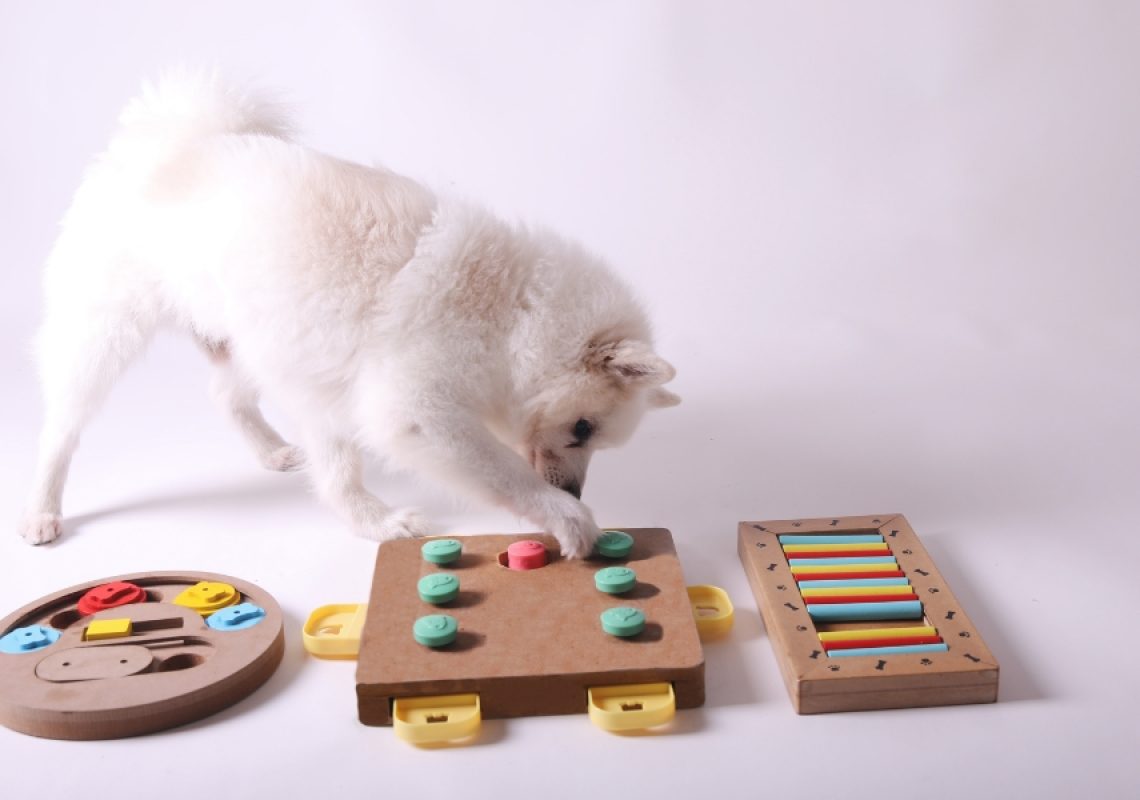
- Start Simple: A dog who’s never encountered puzzle toys needs beginner-level challenges. Frustration from overly difficult puzzles defeats the purpose of mental enrichment.
- Rotate Toys: Dogs solve familiar puzzles easily without significant mental effort. Rotation keeps puzzles engaging and maintains the cognitive challenge.
- Use Food Dispensers: Kongs stuffed with frozen food provide extended mental engagement. Dogs must work continuously to extract food, creating sustained cognitive activity.
What Makes Scent Work Such Powerful Mental Stimulation?
- Simple Hide-and-Seek: Hiding treats around your house or yard engages natural foraging instincts and provides cognitive challenge through pattern recognition.
- Scent Discrimination: Teaching your dog to identify specific scents requires intense focus, learning, and sensory processing.
- Weather-Proof Activity: Indoor scent work provides essential mental enrichment on extreme weather days when outdoor exercise isn’t possible.
How Does Training Itself Provide Mental Stimulation?
- Trick Training: Teaching “spin,” “bow,” or “play dead” challenges cognitive capacity while building confidence.
- Impulse Control: Exercises like “wait” or “leave it” require dogs to suppress natural impulses, engaging executive function in exhausting ways.
- Behavior Chaining: Teaching sequences (“sit, down, roll over, sit”) requires memory and body awareness that single commands don’t provide.
What DIY Mental Enrichment Activities Can You Create at Home?
Activity Type | How to Create | Cognitive Benefits | Best For |
Treat Scatter | Scatter treats in grass or on a snuffle mat | Foraging, focus, olfactory engagement | All dogs, especially scent-driven breeds |
Muffin Tin Game | Place treats in muffin tin cups, cover with tennis balls | Problem-solving, nose work, persistence | Beginners to intermediate |
Box Puzzle | Hide treats in nested cardboard boxes with crumpled paper | Problem-solving, persistence, confidence | All levels |
Towel Roll | Roll treats inside a towel for the dog to unroll | Problem-solving, nose work, gentle activity | Older dogs, calm breeds |
Frozen Treats | Freeze treats in ice, broth, or a Kong | Sustained engagement, cooling activity | Summer days, high-energy dogs |
Hidden Toy Hunt | Hide favorite toys around house/yard to find | Memory, searching, olfactory work | All dogs, especially retrievers |
DIY Agility | Create obstacle course with household items | Physical + mental, problem-solving | Active dogs, all ages |
How Do You Make Daily Routines More Mentally Stimulating?
- Ask for Behaviors: Request a “sit” before meals, “down” before going outside, or “wait” before getting out of the car. These tiny moments provide cumulative mental engagement.
- Vary Walking Routes: The same walk daily becomes automatic. New routes require processing new environmental information.
- Train on Walks: Practice commands in distracting environments. “Sit” at curbs or “leave it” for interesting smells transforms walks into mental work.
- Allow Choices: Let your dog make safe choices—which direction to walk or which toy to play with. Decision-making provides cognitive engagement that rigid routines lack.
When Should You Seek Professional Help for Mental Enrichment?
What Signs Indicate Your Dog Needs Professional Guidance?
- Destructive behavior persists despite adequate physical exercise and DIY mental stimulation attempts.
- Your dog becomes frustrated or stressed by enrichment activities instead of satisfied.
- You have a high-drive working breed exhibiting behavioral problems despite your best efforts.
- Your dog has underlying anxiety issues complicated by cognitive under-stimulation.
How Does Furever K9 Incorporate Mental Stimulation into Training?
- Board and Train: Our Board and Train programs include structured mental enrichment activities throughout your dog’s stay, including puzzle toys, scent work, and novel experiences.
- Group Classes: We offer Group Classes that provide socialization plus mental engagement through learning in distracting environments.
- Day Trining: Our Day Training provides daily professional mental stimulation your dog might not receive at home, returning them mentally satisfied.
Conclusion
FAQs
Most dogs need 15-30 minutes of dedicated mental stimulation daily beyond regular training. High-drive working breeds may need 45-60 minutes. This can be divided into multiple shorter sessions throughout the day. Mental work tires dogs efficiently, so start conservatively and increase based on your dog’s response and settling behavior.
No. Dogs need both mental and physical activity, though proportions vary by breed and individual. Mental stimulation satisfies cognitive needs that exercise doesn’t address, but it doesn’t provide necessary physical movement, muscle maintenance, or cardiovascular benefits. The most effective approach combines appropriate levels of both.
Rotate toys rather than leaving them constantly available. Store puzzles and rotate them weekly to maintain novelty. Increase difficulty gradually as your dog masters easier levels. If your dog consistently loses interest, they may need different enrichment types like scent work or training games matching their preferences better.
Signs of excessive difficulty include giving up quickly, showing frustration (whining, pawing frantically), or avoiding the puzzle entirely. Start with easier versions and gradually increase complexity. Success and engagement indicate appropriate difficulty. Your dog should work persistently without becoming stressed or frustrated.
Training is profound mental stimulation. Learning new behaviors requires focus, memory, problem-solving, and body awareness—all cognitively demanding tasks. Even practicing known behaviors in new environments provides mental challenge through generalization and impulse control in distracting settings. Training sessions exhaust dogs mentally regardless of behavior utility.