

Essential Guide to Dog Dental Care for Virginia Dog Owners
Author picture

Essential Guide to Dog Dental Care for Virginia Dog Owners: Habits That Protect Your Dog’s Health

Dental disease is one of the most common health problems in dogs, and one of the most preventable. Here's what a real at-home dental care routine looks like — the supplies you need, a step-by-step brushing method, and how to handle a dog who won't sit still for it.

The Quick Guide to Dog Dental Care

Dental disease is one of the most common health problems in dogs, and one of the most preventable. Here is what a real at-home dental care routine looks like for Virginia dog owners.

  • Early onset is common: Periodontal disease is the most common dental condition in dogs. Most dogs show some early evidence of it by age three if it is not addressed.
  • Systemic health impact: Dental disease does not stay contained to the mouth. It has been linked to changes in the heart, kidneys, and liver.
  • The right supplies: Always use canine-safe enzymatic toothpaste. Human toothpaste contains ingredients that are not safe for dogs.
  • Consistency over perfection: Daily brushing offers the strongest protection, though even a few sessions a week make a measurable difference.
  • Local professional support: Toothbrushing with organic tooth gel is included as part of FureverK9's All-Inclusive Grooming service in Leesburg, VA, serving Loudoun County and Northern Virginia.
If you are a dog owner in Northern Virginia, Loudoun County, or the greater Leesburg area, dental care is one of the most important — and most overlooked — parts of keeping your dog healthy year-round. Virginia’s active outdoor lifestyle means many local dogs spend significant time hiking trails in the Blue Ridge foothills, swimming in the Potomac tributaries, and socializing at dog-friendly parks across Loudoun County. All of that activity is wonderful, but it does not replace the daily habits that protect your dog’s teeth and gums over a lifetime.
 
Essential dog dental care comes down to three habits working together: regular tooth brushing, dental-friendly chews, and routine veterinary checkups to catch problems early. Left unaddressed, dental disease is one of the most common health issues dogs face, especially as they age, and it can lead to pain, infection, and effects that reach well beyond the mouth. Consistent home care paired with professional cleanings is what actually protects long-term oral health.
 

Why Dog Dental Health Matters More Than Most Virginia Dog Owners Realize

Most owners think of dental care as cosmetic — fresh breath and white teeth. The reality is considerably more serious. According to the , periodontal disease is the most common dental condition in dogs and cats, and most pets will show some early evidence of it by age three if effective preventive care is not in place.
 
Periodontal disease progresses in four stages, from mild gum inflammation (Stage 1) to severe bone loss and tooth root exposure (Stage 4). At the early stages, the damage is reversible with professional cleaning and consistent home care. By the later stages, tooth extraction may be the only option, and the infection can have already spread systemically. The AVMA has documented associations between advanced periodontal disease and changes in the kidneys, liver, and heart muscle. This is not a cosmetic problem — it is a whole-body health problem that starts in the mouth.
 
Small and toy breeds face an even higher risk than larger dogs. Their teeth are proportionally crowded into a smaller jaw, which creates more surface area for plaque to accumulate and makes regular cleaning even more important. In Northern Virginia communities like Leesburg, Ashburn, Purcellville, and Hamilton, where smaller companion breeds are extremely popular, dental disease is one of the most common preventable health issues veterinarians see. Breeds like Chihuahuas, Yorkshire Terriers, Dachshunds, and Maltese are particularly prone to early dental disease and often need more frequent professional attention than their larger counterparts.
 

What Do You Need Before Starting Dog Dental Care?

A few basic supplies and a bit of planning make the difference between a smooth routine and a frustrated dog. Preparing properly before starting a dental routine helps avoid setbacks and builds a habit that actually sticks.
 

What Supplies Are Needed for Brushing a Dog’s Teeth?

A dog-specific toothbrush and enzymatic toothpaste form the foundation of any routine. Human toothpaste contains ingredients that are not safe for dogs, so a proper substitute matters. Enzymatic toothpastes work by breaking down plaque chemically, which means they provide some benefit even if the dog swallows the paste rather than having it rinsed away. Owners should also keep dental wipes or gauze on hand for dogs that resist bristles at first, along with treats for positive reinforcement during early sessions.
 
Before the first brushing session, gather these items:
  • Canine-safe enzymatic toothpaste
  • A soft-bristled dog toothbrush or finger brush
  • Dental wipes as a backup option
  • Reward treats to reinforce calm behavior
At FureverK9 Resort & Training Center in Leesburg, Lauren White’s team regularly guides Loudoun County dog owners through building this kind of routine at home, particularly new owners who are unsure where to start.

How Do You Brush Your Dog’s Teeth?

A short, consistent routine practiced daily builds a real foundation for dental health. Skipping brushing lets bacteria multiply along the gumline, forming plaque that can harden into tartar within days. A steady process protects against that outcome while building trust between dog and owner along the way.
 
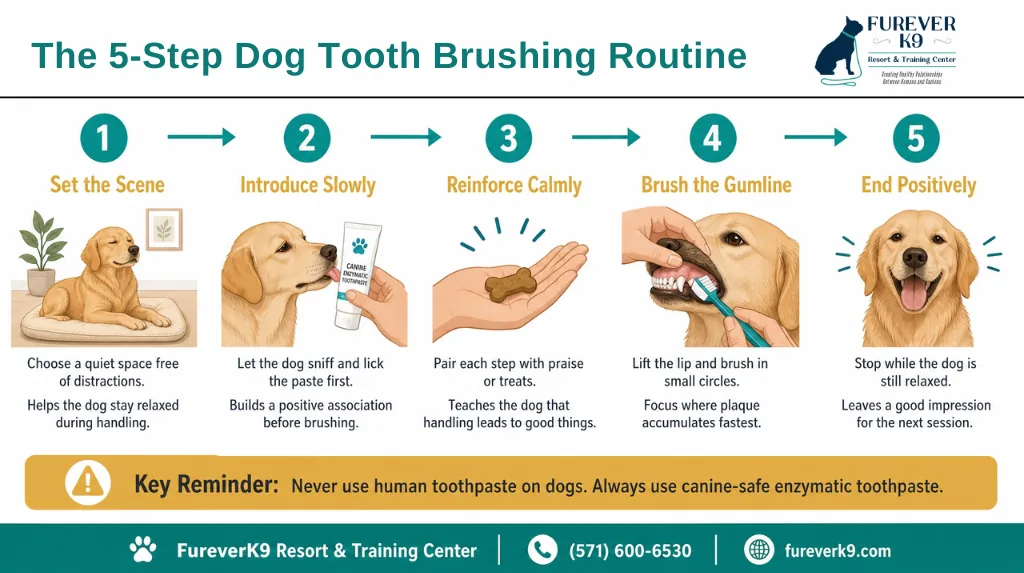
The 5-Step Brushing Routine
Step
Action
Why It Matters
1. Set the Scene
Choose a quiet, calm space free of distractions.
Helps the dog stay relaxed and focused on the handling.
2. Introduce Slowly
Let the dog sniff and lick the paste first.
Builds a positive association with the taste before brushing begins.
3. Reinforce Calmly
Pair each step with praise, treats, or a toy.
Teaches the dog that handling leads to good things.
4. Brush the Gumline
Lift the lip gently and brush in small circles.
Focuses on the area where plaque accumulates fastest.
5. End Positively
Stop while the dog is still relaxed.
Leaves a good impression for the next session, even if brief.
Dogs adjusting to a new handling routine often resist at first, and that reaction is not defiance. It usually just means the dog needs more structure and predictability before the routine feels normal. Forcing the process tends to backfire, teaching a dog to associate brushing with stress rather than routine care.
 

How Often Should Dog Teeth Be Brushed?

Daily brushing offers the strongest protection against plaque buildup, though even a few sessions a week make a measurable difference. Consistency matters more than perfection. A predictable schedule helps dogs settle into the habit far faster than sporadic attempts. Think of it the same way you approach training: short, frequent, positive sessions build better results than long, infrequent ones.
 

What If Your Dog Won’t Sit Still for Brushing?
Short sessions work better than long ones for resistant dogs. Building tolerance gradually, with positive reinforcement at every stage, prevents a dog from associating the toothbrush with stress in the first place. Start with just touching the muzzle, then the lips, then the teeth, rewarding each step before moving to the next. Structure and repetition, not force, are what actually help a dog accept the routine over time. For Loudoun County dog owners dealing with significant handling resistance, coordinating dental care with a can make the process significantly smoother.

What Supplemental Dental Products Actually Help?

Brushing is the gold standard, but it is not the only tool available. Several supplemental products can help reduce plaque and tartar between brushing sessions when used correctly.
 
Dental Chews work by mechanically scrubbing the tooth surface as the dog chews. Look for products with the Veterinary Oral Health Council (VOHC) seal, which indicates the product has met published standards for plaque or tartar reduction. Not all chews on the market carry this seal, and some provide minimal dental benefit despite their marketing claims. Virginia dog owners can find VOHC-approved products at most local pet supply stores in the Northern Virginia area.
 
Water Additives are tasteless solutions added to a dog’s drinking water that help reduce oral bacteria. They are a low-effort supplement for busy Northern Virginia households, but they work best as a complement to brushing rather than a replacement.
 
Dental Wipes and Gauze are useful for dogs who resist a toothbrush. Wrapping gauze around a finger and gently rubbing the tooth surfaces removes some surface plaque and helps desensitize the dog to oral handling over time.
 
The that not all dental products marketed for oral health are equally effective, and recommends checking with a veterinarian before relying on any one product. Chews and water additives work best paired with hands-on brushing and professional monitoring, not as a standalone substitute.
 

How Do You Prevent Gum Disease Long-Term?

Long-term prevention depends on daily consistency, not occasional effort. The AVMA notes that periodontal disease does not stay contained to the mouth. It has been associated with changes in the kidneys, liver, and heart, which is why small daily habits protect far more than just a dog’s smile.
 
A simple, repeatable prevention plan works best for Virginia dog owners:
  • Establish a daily or near-daily brushing routine, using a dog-safe toothbrush and enzymatic toothpaste.
  • Choose appropriate dental care products, including VOHC-approved dental chews and water additives, to reduce plaque between brushings.
  • Schedule regular veterinary checkups with your Loudoun County or Northern Virginia veterinarian to catch early gum inflammation before it worsens.
  • Watch for bad breath, redness, or swelling, and address changes promptly rather than waiting for the next scheduled appointment.

When Does a Dog Need a Professional Dental Cleaning?

At-home care slows the progression of dental disease, but it cannot replace professional veterinary dental cleanings. Tartar that has hardened below the gumline cannot be removed by brushing alone. Professional cleanings are performed under anesthesia, which allows the veterinarian to safely scale below the gumline, take dental X-rays to assess bone health, and treat any active infection. Most dogs benefit from a professional cleaning at least once a year, though dogs with a history of dental disease or those in higher-risk breeds may need it more frequently. Your Northern Virginia veterinarian is the best guide for your individual dog’s schedule.
 

Why Does Consistency Matter More Than Product Choice?

Sporadic care lets plaque harden into tartar, undoing weeks of progress in a matter of days. A predictable schedule builds a routine the dog tolerates calmly, much the same way consistent training builds trust and cooperation over time. The best dental product on the market is far less effective in the hands of an inconsistent owner than a basic toothbrush used daily.
 
Dental care is one of the easiest health routines to put off, and one of the most consistently worth doing. For Leesburg and Loudoun County dog owners who prefer professional support, toothbrushing with organic tooth gel is included in FureverK9’s , alongside bathing, nail care, and ear cleaning. For dogs who struggle with handling, Lauren White’s can help build comfort with oral care through structured desensitization. Call (571) 600-6530 or fill out our to get started.

FAQs

As early as puppyhood. Introducing the toothbrush and paste as a normal, positive routine while a dog is young makes it far easier to maintain than starting the habit later in life. Puppies who are handled around the mouth regularly grow into adults who tolerate dental care without resistance.

Mild breath odor can be normal, but the as one of the signs that should prompt an earlier veterinary dental check, especially alongside other symptoms like discolored teeth, drooling, or reduced appetite. Persistent foul odor is one of the earliest signs of active dental disease.

No. Human toothpaste contains ingredients that are not safe for dogs, including xylitol, which is toxic to dogs, and fluoride in concentrations that can cause harm if swallowed. Always use a toothpaste made specifically for dogs.

No. While VOHC-approved dental chews can help reduce plaque and tartar, they are not a replacement for regular brushing and professional veterinary cleanings. They work best as a supplement to, not a substitute for, a complete dental care routine.

Toothbrushing with organic tooth gel is included as part of FureverK9’s All-Inclusive Grooming service at our Leesburg, VA facility, alongside bathing, haircuts, nail grinding, and ear cleaning. We serve dog owners throughout Loudoun County, including Ashburn, Purcellville, Hamilton, Middleburg, and the surrounding Northern Virginia area.

Share this Success Story!

I know I need help!!!

Let Lauren know what you're struggling with!
She'll get in touch with you to discuss options!