

Why Dogs Fear Bathing and How to Build Confidence
Author picture

Why Dogs Fear Bathing and How to Build Confidence

Why dogs fear bathing and how to build confidence. Desensitization protocol and positive grooming experiences. FureverK9 Leesburg grooming services. (571) 600-6530.
Your dog trembles at the sight of the bathtub. They panic when water touches their paws. They try to escape, they struggle, and they act like bathing is an agonizing ordeal. You have tried offering treats, you have tried speaking calmly, and you have even tried forcing them through the process. Nothing seems to work. The result is a stressful experience where you feel frustrated, your dog feels traumatized, and both of you dread the next bath time.
 
Many owners assume the problem is simply the water. They believe their dog is just being difficult or that some dogs are naturally afraid of baths, leaving them feeling helpless.
 
Here is what most dog owners are missing: Your dog’s fear of bathing is not about water. It is entirely about control, vulnerability, and trust. When your dog is placed in a bathtub, they are wet, slippery, trapped in a confined space, unable to escape, and have someone else controlling their body. For a dog that has not learned trust through proper handling, this situation feels terrifying. For a dog with a history of rough handling or negative experiences, it can trigger actual trauma.
 
I am Lauren White, and at FureverK9 Resort & Training Center in Leesburg, Virginia, I work with anxious Loudoun County dogs—many of whom are terrified of bathing and grooming. The transformation that occurs when owners understand that bathing fear is about trust, not water, is profound. Dogs that were once impossible to bathe become calm and cooperative. Owners realize that building confidence and trust during handling actually solves the root of the problem.
 
This understanding is why grooming is an integral part of FureverK9’s overall dog development philosophy. Kathy Taylor, our experienced groomer, is not merely bathing dogs. She is actively building confidence, teaching trust, and creating positive associations with handling that strengthen your entire relationship with your dog.
 
Your dog’s bathing fear can be resolved. However, success requires understanding what is actually causing the anxiety and learning how to build the foundation necessary to overcome it.

What Does Your Dog’s Bathing Fear Actually Mean?

Understanding the underlying mechanism of your dog’s fear explains why forcing them through a bath only makes the situation worse.

Why Dogs Develop a Fear of Bathing

Dogs do not naturally fear water. Puppies who have not experienced negative associations will happily play in puddles and splash in streams. A dog’s fear of bathing is a developed response, not an innate characteristic.
 
When your dog is in a bathtub, they experience a profound loss of control and increased vulnerability. They cannot easily escape the confined space, and the slippery surface causes a loss of footing. They are placed in a vulnerable position while someone manipulates their body, and the unpredictable splashing of water acts as an uncontrollable stimulus. Ultimately, they feel completely dependent and defenseless. If your dog has not learned to trust you during handling, this combination of factors feels genuinely terrifying.
 
Furthermore, past experiences play a significant role. Many dogs that are fearful of bathing have histories of rough handling, such as being rushed by impatient owners or being forcibly picked up and placed in the tub against their will. Scary experiences, like getting water in their face or ears, or being punished and scolded while wet and vulnerable, can leave lasting psychological scars. Rescue dogs, in particular, may have unknown traumatic pasts that contribute to their fear. A single negative bathing experience during a critical developmental period can create lasting anxiety.
 

How Improper Handling Creates Lasting Anxiety

When a dog is anxious about bathing, an impatient owner may rush through the process, grabbing the dog harshly. The dog naturally tries to escape, leading the owner to force compliance. In this scenario, the dog learns a damaging lesson: bathing is scary, escape is impossible, and their human does not respect their fear. This broken trust causes the dog’s anxiety to increase significantly for the next bath, creating a cycle that intensifies over time.
 
The result is that the dog may develop an actual anxiety disorder surrounding bathing. Trust in the owner decreases, and the anxiety often generalizes to other forms of handling, making the dog defensive during any grooming activity. The problem compounds rather than improves.
 
Forcing a fearful dog through a bath does not help them “get over it.” Instead, it teaches them that their fear was justified because something unpleasant did happen. It reinforces their belief that they cannot control the situation and that humans will not respect their boundaries, ultimately destroying trust and creating more anxiety.
 

What Confident Handling Looks Like

In contrast, confident and trusting dogs enter the tub willingly or with minimal guidance. They stand calmly in the water, accept water on their body and paws, and trust their handler to avoid sensitive areas. They recover quickly if startled and may even enjoy the grooming experience.
 
The difference lies in the dog’s learned experience. A confident dog has learned that they are safe during handling and trusts that the handler respects their comfort. They have been gradually desensitized, know they are not trapped, and have developed a positive association with grooming. The foundation for this confidence is trust and proper handling established during early developmental periods or rebuilt gradually in anxious dogs.

How Does Bathing Anxiety Develop?

Understanding the progression of anxiety explains why some dogs are terrified while others remain calm.

The Role of Early Handling and Socialization

The critical period for handling and socialization occurs between 3 and 16 weeks of age. Puppies who are handled gently, regularly, and positively during this window learn that touch is safe, human hands do not hurt, and being handled is not a scary experience. Trust becomes their foundation.
 
Conversely, puppies without positive early handling do not learn trust during vulnerable moments. They may develop anxiety around being touched or controlled, making bathing—which combines extreme handling with vulnerability—terrifying. Rescue dogs with unknown histories often show severe bathing fear because they may have experienced rough handling or previous trauma without a foundation of trust, leading to deeply conditioned fear responses. The earlier trust is built through proper handling, the fewer bathing issues will develop.
 

The Anxiety Progression Stages

Anxiety typically escalates through predictable stages if left unaddressed.
Stage
Anxiety Level
Observable Behaviors
Stage 1
Mild Concern
Hesitant about the bathtub; reluctant to enter but will comply with encouragement; manageable with patience.
Stage 2
Escalating Fear
Refuses to enter the tub; shakes or trembles; attempts to escape; exhibits panting and whining.
Stage 3
Severe Anxiety
Panics at the sight of the tub; tries to bolt or hide; distrusts handling during the bath; displays defensive behavior such as snapping or growling.
Stage 4
Generalized Anxiety
Fear extends to all grooming activities; anxiety surrounds any form of handling; veterinary visits become highly stressful; trust is severely damaged.
Without intervention, anxiety will continue to escalate and generalize to other areas of the dog’s life.

How to Build Bathing Confidence Through Desensitization
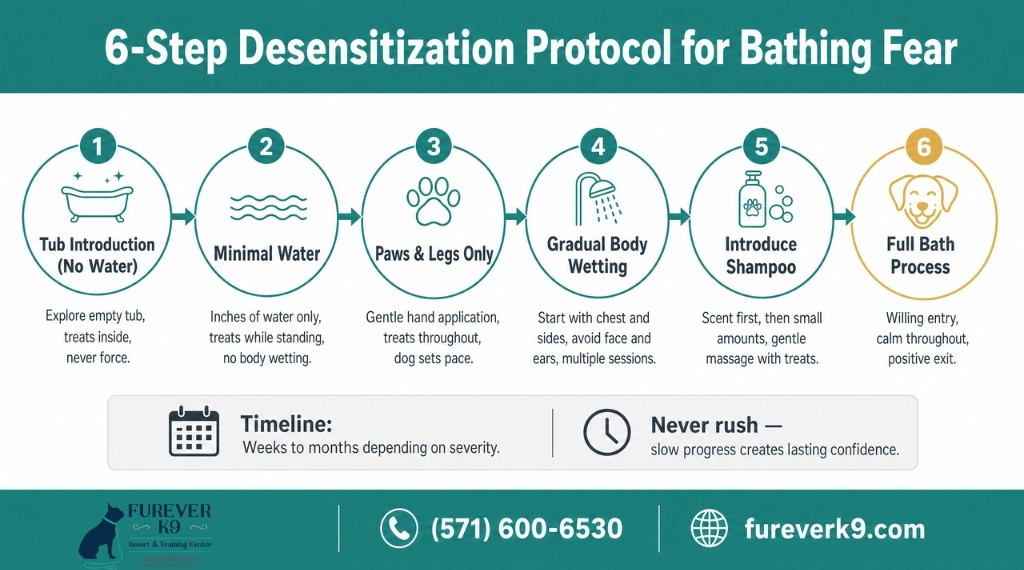
Understanding the desensitization protocol explains why rushing through the process or forcing compliance is ineffective.

The Desensitization Protocol for Bathing Fear

The foundational principle of desensitization is gradually exposing the dog to the feared stimulus at a low intensity while pairing it with a positive experience. This process teaches the dog that the feared object or situation is actually safe.
 

Step 1: Tub Introduction (No Water)

Allow the dog to explore the empty, dry tub. Provide high-value treats inside the tub to encourage the dog to enter willingly. Never force the dog into the tub. This step requires multiple sessions over days or weeks until the dog enters the tub without hesitation.

Step 2: Minimal Water (Inches)

Add a small amount of water to the tub, just enough to cover the bottom. Allow the dog to enter the tub, providing treats while they stand in the shallow water. Do not apply water to their body yet. The goal is for the dog to stand calmly in a few inches of water.

Step 3: Water on Paws and Legs

Increase the water level slightly. Use your hand to gently introduce water to the dog’s paws and legs only, providing treats throughout. Allow the dog to decide the pacing and back away if needed. Never use a sprayer at this stage; rely only on gentle hand application until the dog allows water on their legs without panic.

Step 4: Gradual Body Wetting

Slowly wet the dog’s body, starting with less vulnerable areas like the chest and sides. Carefully avoid the face, ears, and sensitive areas. Provide treats between steps over multiple sessions until the dog stays calm while being wetted.

Step 5: Introduction to Shampoo

Once the dog is calm with the water, introduce the scent of the shampoo without applying it. Then, apply small amounts to the dog’s fur with a gentle massage, providing treats throughout. The goal is for the dog to remain relaxed during the gentle massage.

Step 6: Full Bath Process

By this point, the dog has learned each component separately. Practice the full bath process using all previous learning. The handler must maintain a gentle, controlled approach, offering treats and praise throughout. Success is achieved when the dog enters the tub willingly, stays calm throughout the bath, and exits calmly.

Critical Timeline and Consistency

This process is not quick. It takes weeks or months depending on the severity of the original fear, the duration the dog has been fearful, the consistency of practice, and the handler’s patience and technique. Each step must be mastered before moving to the next. Rushing or skipping steps causes the dog to experience failure, increasing their fear and lengthening the overall timeline. Slow and steady desensitization creates lasting confidence.

Why Proper Handling During Grooming Builds Trust

Viewing grooming as a vital part of dog development changes how you approach the entire process.
 

Grooming as Confidence Building, Not Just Cleaning

Grooming teaches your dog essential lessons about trust and body awareness. During grooming, a dog learns that they can trust a human even when they are vulnerable and cannot escape. They learn that the handler respects their comfort and that handling is safe. This foundational trust extends to veterinary visits, medication administration, and emergency handling.
 
Furthermore, grooming helps the dog learn that all parts of their body can be touched safely. They become comfortable with being handled, and their confidence in their own body grows. By associating grooming with care, the dog learns that grooming means their person cares about them and that they will feel better afterward.
 
Dogs who learn trust during grooming are generally calmer at the vet, accept medication more easily, are easier to handle in emergencies, have stronger bonds with their owners, and show less overall anxiety. Grooming is not separate from dog development; it is central to it.
 

Kathy Taylor’s Grooming Approach at FureverK9

Kathy Taylor joined the FureverK9 team because she shares our core philosophy: grooming builds confidence and trust, it does not merely clean dogs. With 13 years of experience, Kathy knows how to handle difficult dogs, recognizes the difference between anxiety and stubbornness, and adapts her approach to individual needs.
 
Her approach begins with a behavioral assessment to understand the dog’s individual needs and fears. She never forces anxious dogs, builds at an appropriate pace, and strictly respects the dog’s comfort level. Through gentle, confident handling, she teaches the dog that grooming is safe, building trust and creating positive associations with each session.
 
For dogs already in our training programs, Kathy coordinates with me to ensure that grooming supports our overall behavioral goals and confidence-building strategies. At FureverK9, grooming is about building trust, confidence, and positive associations with handling and care.

How to Support Bathing Confidence at Home

Understanding your role as an owner explains why consistency is crucial for success.
 

Handling Practices That Build Trust Daily

You can build trust daily through gentle, regular touch. Pet your dog with intention and handle their paws, ears, and muzzle regularly, as these are areas touched during grooming. Doing this when the dog is not being bathed normalizes the handling.
 
Always respect your dog’s boundaries. If your dog pulls away, do not force the interaction. Letting the dog choose when to approach shows that you respect their comfort and builds trust that you will listen to their signals. Manage your own emotional state, as your anxiety and impatience will transfer to your dog. Your calm confidence is contagious. Finally, build positive associations by using treats and praise during handling, ensuring that touch equals good things, and never punishing fear.
 

When Professional Help Is Needed

Some situations require professional intervention. If your dog experiences severe anxiety, panics at the sight of the bathtub, displays defensive behavior, or has generalized anxiety around handling, professional support is necessary. Rescue dogs with unknown pasts, histories of rough handling, or previous traumatic bathing experiences also require expert help to rebuild trust. If you have attempted the gradual desensitization approach but your dog is not improving or their anxiety is intensifying, a professional assessment is needed.
 
At FureverK9, Kathy and I work together to help dogs overcome bathing anxiety through a comprehensive approach:
 
: I coach you on handling and desensitization, teaching confidence-building techniques, supporting your at-home practice, and addressing the root causes of anxiety.
: Kathy provides professional, confident handling that builds trust through expert grooming and creates positive experiences.
: I address the behavioral anxiety while Kathy provides professional grooming support, creating an integrated approach for lasting results.
 
At our facility at 20690 Gleedsville Road in Leesburg, Virginia, we understand that Loudoun County dogs with bathing anxiety need comprehensive support to build confidence.

What Bathing Confidence Looks Like

Understanding the end goal explains why the journey is worth the effort.
 
When your dog builds bathing confidence, they will enter the tub with minimal guidance and show trust in the handler without attempting to escape. Their behavior will be calm, characterized by a relaxed body posture, no trembling, and an acceptance of water and handling. They will develop a positive association, no longer hiding when bathing supplies appear, and may even seek you out for petting after the bath. This trust extends to veterinary visits and general handling, resulting in a stronger bond and less overall anxiety.
 
The transformation is remarkable. Dogs that were terrified become calm and cooperative. Owners who dreaded bath time find it becomes a peaceful ritual. Trust deepens because the dog learns you respect their comfort. This is what bathing confidence looks like, and it is achievable for almost every dog.
Your dog’s bathing fear is not permanent, and it is not about them being difficult. It is about trust, vulnerability, and proper handling. Understanding that desensitization works, but takes time and patience, changes your approach. At FureverK9, we see bathing as a vital part of overall confidence building and trust development.
 
Ready to help your dog overcome bathing anxiety? Contact at (571) 600-6530 or visit us at 20690 Gleedsville Road, Leesburg, VA 20175. Your dog can learn to trust bathing, but first, they need to learn to trust the process.

FAQS

Your dog has learned that the bathtub predicts something scary, so anxiety begins before the bathing even starts. This is classical conditioning—the tub itself triggers a fear response. The solution is to separate the tub from the bathing experience. Leave the tub empty for days, allowing your dog to explore and receive treats inside. Once the tub feels safe, you can slowly introduce water.

No. Forcing a dog actually increases anxiety and damages trust. It teaches the dog that their fear was justified, that they cannot escape, and it breaks your relationship. Desensitization works; forcing does not. Desensitization takes longer but creates lasting confidence instead of temporary, fearful compliance.

The timeline depends on the severity of the fear and the consistency of your practice. Mild anxiety might improve in weeks, while severe anxiety or a trauma history might take months. The timeline is determined by when the dog reaches complete calmness at each stage. Rushing the stages will set you back, and consistency matters more than speed.

This is usually the result of a single bad experience, such as getting water in their face, rough handling, slipping, or being startled during a bath. One traumatic experience during a period of peak sensitivity can create lasting fear. Address the specific incident if possible and resume the desensitization process from the beginning.

Yes. A professional groomer brings confident handling that teaches trust. Your dog learns from the professional that grooming can be safe, which supports your desensitization work at home. Professional handling often helps anxious dogs significantly because the dog may trust the professional differently.

Share this Success Story!

I know I need help!!!

Let Lauren know what you're struggling with!
She'll get in touch with you to discuss options!