

- The Reality: Pacing is not just nervous energy you can “exercise out.” It is a sign of nervous system dysregulation.
- The Causes: Dogs pace due to anxiety, anticipation, environmental stress, or physical pain.
- Medical vs. Behavioral: If pacing is accompanied by limping, lethargy, or changes in appetite, see a vet immediately. If it happens only before walks or when you leave, it’s likely behavioral.
- The Solution: For behavioral pacing, create a strict daily routine, practice impulse control, and provide mental enrichment.
- The Bottom Line: Never punish a pacing dog. Their nervous system is overwhelmed, and they need structure, predictability, and professional guidance to find calm.
What Is Dog Pacing Really?
Why Do Dogs Pace?
- Stress Hormone Release: Pacing releases cortisol and adrenaline, helping process anxiety. The repetitive motion has a self-soothing effect, similar to rocking in humans.
- Anticipation Management: When anticipating an exciting or stressful event (like a walk or guest arrival), dogs pace to manage mounting emotion.
- Pain Processing: Dogs experiencing pain or nausea pace because staying still intensifies their awareness of the discomfort.
- Environmental Stress: Changes in routine, noise, or a lack of predictability create chronic low-level anxiety, keeping the dog in “threat mode.”
The 4 Types of Pacing
Pacing Type | When It Happens | Key Signs | The Solution |
Anxiety Pacing | During specific triggers (e.g., thunderstorms, departures) | Whining, panting, lip licking, inability to settle | Training, management, confidence building |
Anticipatory Pacing | Before favorite activities (walks, meals, car rides) | Bouncing, tail wagging mixed with frantic pacing | Impulse control training, managing anticipation |
Environmental Pacing | Chronic, low-level pacing throughout the day | Lacks structure, routine, or mental enrichment | Structured routine, daily schedule, mental work |
Medical Pacing | Across multiple contexts, randomly | Limping, stiffness, vomiting, loss of appetite | Immediate veterinary evaluation |
How Do You Know If Pacing Is Behavioral or Medical?
What Signs Indicate Medical Pacing?
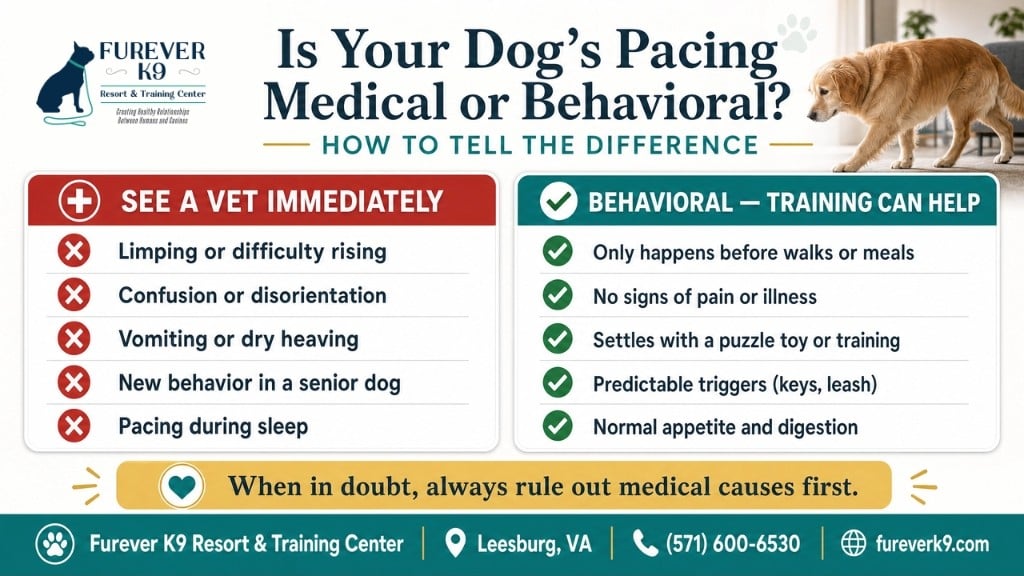
Seek veterinary evaluation immediately if you notice:
- Pain Indicators: Limping, difficulty rising, stiffness after rest, or excessive panting.
- Neurological Symptoms: Confusion, disorientation, bumping into objects, or circling repeatedly (especially in seniors).
- Gastrointestinal Signs: Vomiting, dry heaving, diarrhea, or visible bloating.
- General Health Changes: Lethargy, unusual sleeping patterns, or sudden weight loss.
What Distinguishes Behavioral Pacing?
- Situation-Specific: Occurs predictably during certain times (before a walk, when you grab your keys).
- Free of Pain Signs: Normal appetite, normal digestion, and normal play when not pacing.
- Responsive to Calming: The dog settles when given a focused activity, like a puzzle toy or training session.
How Do You Stop Anxiety and Anticipatory Pacing?
The Predictability Protocol
- Feeding Times: Feed at the same time daily. No treats or begging between scheduled meals.
- Potty Breaks: Schedule consistent times (after waking, before bed, mid-day) rather than “on demand.”
- Walk Times: Walk at the same time daily so the dog learns when it is coming, reducing frantic anticipation.
- Rest Periods: Define quiet times without activity so the dog learns that rest is part of the schedule.
Training to Address Anticipatory Pacing
- “Place” Command Mastery: Teach your dog to go to a designated spot (bed, mat, crate) during high-anticipation moments. This redirects pacing energy into settling.
- “Sit and Wait” Protocol: Before exciting events, require a sit. The walk only happens after a calm sit.
- Desensitization to Triggers: If pacing starts when you grab the leash, practice grabbing the leash frequently without walking so the dog stops anticipating the trigger.
Creating a Calming Environment
- Designate a Safe Zone: Create an area (crate, bed, specific room) where the dog feels secure and can retreat to regulate their nervous system.
- Provide Mental Enrichment: Use puzzle toys, sniffing games, and training. Engaging the brain prevents anxiety from filling the mental space.
- Maintain Calm Energy: Keep household volume and activity levels consistent. Dogs reflect owner anxiety.
When Should You Seek Professional Help?
When Do You Need Veterinary Assessment?
When Do You Need Professional Training Help?
- You have vet clearance confirming no medical issues.
- You have tried routine and structure, but the pacing persists.
- The pacing prevents the dog from settling, eating, or sleeping, affecting their quality of life.
- Your household is struggling to implement protocols consistently.
How Does Furever K9 Address Dog Pacing?
FAQs
Your dog is experiencing mounting anticipatory excitement they cannot contain. Pacing helps them manage this building emotion. The solution is teaching impulse control, like requiring a calm sit before the walk begins.
Pacing is a repetitive, circular movement triggered by anxiety, anticipation, or discomfort. True hyperactivity is a constant inability to focus or settle, which is rare; most “hyperactive” dogs are simply anxious or under-stimulated.
Not on its own. While exercise helps, excessive physical activity without addressing the underlying anxiety often makes pacing worse by reinforcing movement as a coping mechanism.
Absolutely not. Pacing is an involuntary nervous system response, and punishment will only increase the anxiety causing it. Instead, redirect them to calm activities and build a predictable routine.
A tired body does not equal a calm mind. If the pacing is driven by anxiety, the nervous system remains dysregulated regardless of physical exhaustion; they need mental enrichment and structure to truly settle.