
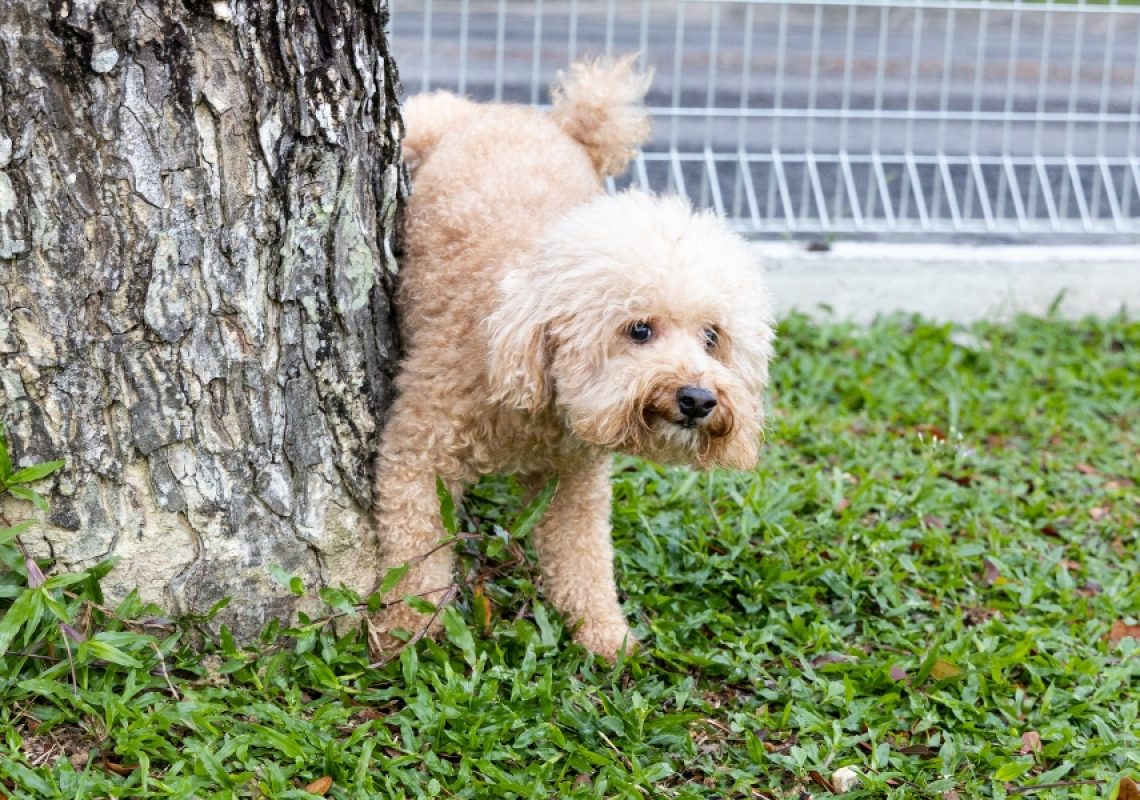
- The Problem: Your dog isn’t peeing out of spite or poor potty training. Submissive urination is an involuntary reflex triggered by fear, anxiety, or overwhelming social pressure.
- The Reality: Scolding, correcting, or physically moving your dog will only make the problem worse. If they feel threatened, they will pee more to appease you.
- The Solution: Change how you interact. Ignore the dog upon arrival, avoid direct eye contact, get down on their level, and build their confidence through reward-based training.
- The Bottom Line: With patience, environmental management, and confidence-building exercises, most dogs can overcome submissive peeing.
What Is Submissive Urination?
The Body Language of Submission
- Cowering or shrinking close to the ground
- Tucking the tail tightly between the hind legs
- Flattening the ears against the head
- Avoiding direct eye contact or squinting
- Rolling onto their back and exposing their belly
- Lip licking or “submissive grinning”
Submissive Urination vs. Excitement Urination
Quick Comparison: Submission vs. Excitement
Feature | Submissive Urination | Excitement Urination |
The Core Emotion | Fear, anxiety, or feeling intimidated. | Overwhelming joy, arousal, or lack of bladder control. |
Body Language | Cowering, tail tucked, rolling over, avoiding eye contact. | Wiggling, jumping, tail wagging high, barking, running around. |
When It Happens | During greetings, when someone leans over them, when scolded, or during loud noises. | During greetings, playtime, when someone comes home, or when anticipating a walk. |
The Goal | To appease a perceived threat and avoid conflict. | To express uncontrollable happiness. |
What Triggers Submissive Urination?
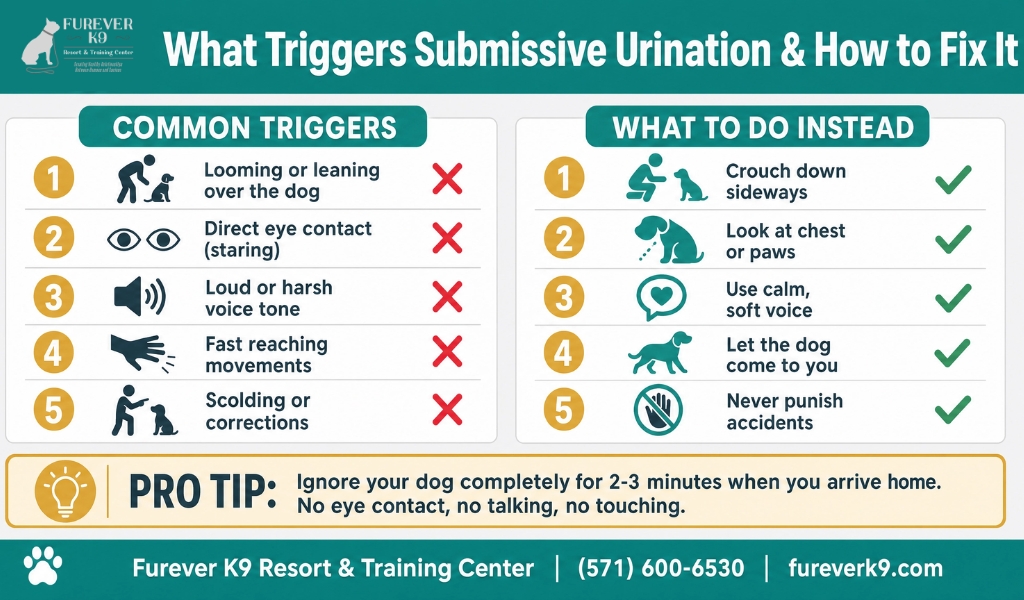
- Looming: Standing directly over the dog or leaning down to pet them.
- Direct Eye Contact: Staring directly into the dog’s eyes, which is confrontational in dog language.
- Loud Voices: Using a booming, deep, or harsh tone of voice.
- Fast Movements: Reaching out quickly to pet the top of their head.
- Corrections: Scolding, yelling, or physical punishment.
How to Stop Submissive Urination: The Action Plan
Step 1: Ignore the Dog During Greetings
Step 2: Change Your Physical Approach
- Don’t loom: Sit on the floor or crouch down sideways.
- Don’t stare: Look at their chest or paws instead of their eyes.
- Don’t reach over: Let the dog come to you. If you pet them, scratch under their chin or on their chest, never on top of their head.
Step 3: Never Punish the Puddle
Step 4: Build Confidence Through Training
When to Seek Professional Help
FAQs
Your dog is likely experiencing submissive urination, an involuntary reaction to feeling intimidated or anxious. Reaching over a dog’s head or leaning down can be perceived as a threat, triggering them to pee as a way to appease you.
Many puppies do outgrow submissive urination as they mature, gain better bladder control, and build confidence. However, consistent, non-threatening interactions and positive reinforcement training are required to ensure they don’t carry the behavior into adulthood.
No, you should never scold or punish a dog for submissive urination. Punishment increases their fear and anxiety, which will actually cause them to urinate more frequently to try and appease you.
Clean the area thoroughly with an enzymatic cleaner designed specifically for pet urine to completely remove the odor. Do this quietly and calmly without acknowledging or scolding the dog.
Yes, reward-based obedience training is highly effective for building a dog’s confidence. Teaching them predictable commands and rewarding success helps them feel secure and reduces the anxiety that triggers submissive peeing.