

What Is Prey Drive and Why Does It Control Your Dog?
How Does Prey Drive Actually Work in Dogs?
Which Dog Breeds Struggle Most with Prey Drive?
Breed Group | The Prey Drive Profile | Typical Behavior |
Sighthounds (Greyhounds, Whippets) | Visual hunters built for speed | Intense, lightning-fast chase; nearly impossible to interrupt once triggered. |
Terriers (Jack Russells, Rat Terriers) | Independent hunters | Tenacious and determined; often complete the sequence through the grab/kill bite. |
Herding Breeds (Border Collies, Aussies) | Movement controllers | Strong eye-stalk-chase sequence, but usually an inhibited bite. |
Sporting Breeds (Labs, Pointers) | Flushers and retrievers | Strong chase-grab instincts, especially toward birds, but generally more biddable. |
Northern Breeds (Huskies, Malamutes) | Primitive hunters | Very strong drive toward small animals; often unsafe off-leash around cats. |
Why Can’t You Just Train Prey Drive Away?
How Do You Actually Stop Dangerous Chasing Behavior?
What Management Strategies Prevent Chasing Incidents?
- Physical Management: Use a 30-foot long line to give freedom to explore while maintaining control if prey appears. This isn’t giving up—it’s being realistic about safety.
- Environmental Awareness: Anticipate triggers. Learn where squirrels frequent on your route or which yards have cats. You can’t train impulse control if your dog rehearses chasing daily.
- Avoid High-Trigger Areas: If off-leash dog parks trigger constant chasing, skip them until your dog has better impulse control. Every completed chase makes the behavior stronger.
- Create Physical Barriers: If your dog obsessively chases movement outside windows at home, block their view to prevent constant arousal.
How Do You Build Impulse Control Strong Enough to Resist Prey Drive?
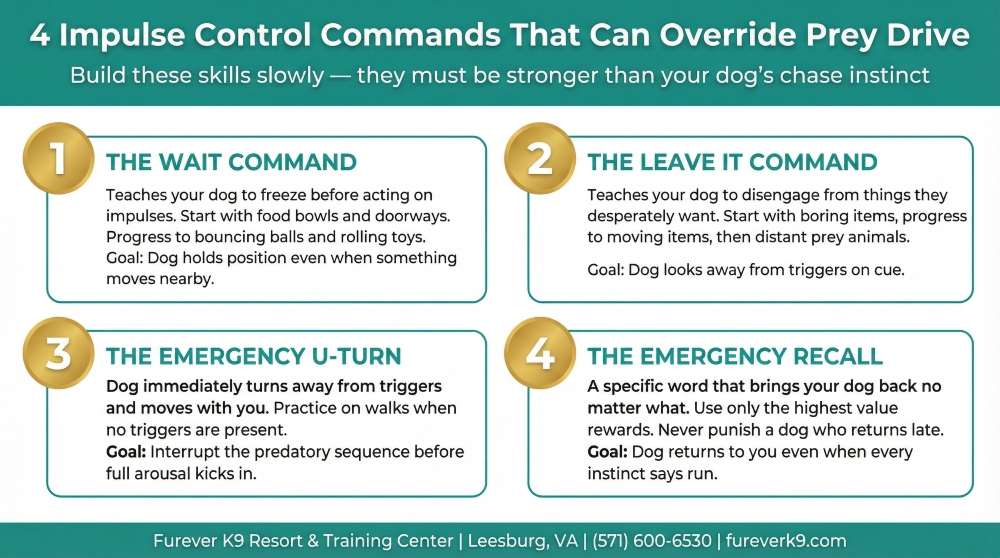
- The “Wait” Command: Teach your dog to freeze before acting on impulses. Start with low-value items (food bowls, doorways) and gradually increase difficulty.
- Practice with Movement: Bounce a ball but require your dog to hold position until released. This directly practices resisting the chase impulse.
- The “Leave It” Command: Teach your dog to disengage from things they want. Start with boring items and progressively increase to moving items. Reward heavily for choosing to look away.
- Emergency U-Turn: Train your dog to immediately turn away from triggers and move with you in the opposite direction, interrupting the predatory sequence before full arousal.
What Makes Recall Work Even with High Prey Drive?
- Use the Best Rewards: Use real chicken, cheese, or hot dogs. Regular kibble won’t compete with a squirrel.
- Progress Slowly: Start indoors with no distractions, then the yard, then quiet outdoor areas. Never call your dog when you know they won’t respond.
- Never Punish the Return: Make coming to you the absolute best thing that happens. Never call them to end fun or do something unpleasant.
- Use an Emergency Word: Have a specific recall word different from their name or casual “come here,” reserved strictly for emergencies.
How Do You Redirect Prey Drive into Safe Outlets?
- Flirt Poles: Allow controlled chase of a lure on a pole, providing intense prey drive satisfaction in structured, safe contexts.
- Lure Coursing: Let your dog chase moving objects in controlled environments (great for sighthounds).
- Scent Work: Redirect prey drive into searching and tracking activities, providing cognitive satisfaction related to hunting.
- Fetch and Retrieval: Satisfy chase-grab portions of the sequence while building solid “drop it” and “wait” commands.
- Treibball: Pushing large balls into goals gives herding breeds an outlet for stalking and movement control instincts.
What Training Actually Works for Prey Drive Dogs?
Why Does Positive Reinforcement Work Better Than Punishment?
How Long Does Training Take Before You See Results?
- Weeks: Basic impulse control with low-level triggers (waiting for a food bowl).
- Months: Impulse control around higher-value triggers (leaving a squirrel at 20 feet).
- Six Months to a Year+: Reliable recall around major prey triggers for high-drive dogs.
When Should You Seek Professional Help for Chasing Behavior?
What Signs Indicate You Need Professional Training?
- Dangerous Incidents: Running into traffic, escaping, or injuries from pulling on the leash.
- Inability to Interrupt: If your dog’s arousal level completely overwhelms any training you’ve attempted.
- Predatory Aggression: Aggression toward small animals, cats, or small dogs requires professional intervention for everyone’s safety.
- Quality of Life Limitations: If you can’t hike, go to parks, or relax on walks.
How Does Furever K9 Address Prey Drive Challenges?
Manage Prey Drive Successfully
FAQs
No. Prey drive is a genetic, instinctual behavior that you must manage and redirect, not eliminate. Training builds impulse control and reliable recall so your dog can resist acting on chase urges, but the underlying instinct remains.
During intense prey drive activation, your dog’s arousal level is so high they literally cannot process verbal commands. Adrenaline floods their system and higher cognitive functions shut down, meaning they are temporarily incapable of responding to you.
Never practice recall in situations where your dog likely won’t respond, as every failed recall weakens the behavior. Use a long line to maintain physical control and practice around gradually increasing distractions over several months.
Generally, no. Prey drive isn’t anxiety-based, so anti-anxiety medication typically doesn’t reduce it. Training and management should always be your primary interventions for prey drive.
Dogs who have completed the full predatory sequence require especially careful management because they’ve experienced the ultimate reward for chasing. Professional guidance is essential, as these dogs often need permanent management rather than relying on training alone.