

It is 95 degrees outside, and your dog is practically begging to go out and play. You let them out for their normal 30-minute yard time. Ten minutes later, you find them panting heavily, drooling thick ropes of saliva, and stumbling when they try to walk. You had no idea your dog was in danger—it has only been ten minutes. Now you are rushing to the emergency vet, terrified you have lost precious time.
Here is the harsh reality that Northern Virginia dog owners often don’t realize about summer heat: Your dog’s ability to cool themselves is drastically different from yours. You sweat across your entire body, using evaporation to drop your core temperature. Your dog can only pant and release a negligible amount of heat through their paw pads. What feels uncomfortably warm to you can be genuinely dangerous—even fatal—to your dog in far less time than you would expect.
I am Lauren White, and while Furever K9 Resort & Training Center in Leesburg focuses primarily on training and boarding, summer safety is crucial knowledge every Loudoun County dog owner must possess. I have seen too many close calls with heat exhaustion, and too many dogs brought to our facility suffering from the effects of well-meaning owners who simply didn’t understand the real dangers of the Virginia summer.
This isn’t just training advice—it is survival information. Here are the 6 critical ways to keep your dog safe during the hottest months of the year.
1. Know Your Dog’s Specific Heat Risk
Not all dogs handle heat equally. Understanding your dog’s physical traits helps you gauge how much heat they can safely tolerate before panting—their primary cooling mechanism—fails.
- Brachycephalic (Short-Nosed) Breeds: Bulldogs, Pugs, Boston Terriers, Boxers, and Frenchies physically cannot cool themselves effectively due to their compressed airways. Their panting is inefficient, putting them in danger at temperatures that wouldn’t bother other dogs.
- Dark or Thick Coats: A black dog in direct sunlight absorbs significantly more heat than a white dog. Heavy double coats (like Huskies or Malamutes) trap heat. Note: Never shave a double-coated breed; the coat actually protects their skin from sunburn, but they still require careful heat management.
- Size and Weight: Very large dogs generate more body heat and have proportionally less surface area for cooling. Overweight dogs carry extra insulation that traps heat while requiring more exertion for normal activity.
- Age and Health: Senior dogs and young puppies regulate their body temperature far less efficiently than healthy adult dogs. Dogs with heart or respiratory conditions cannot pant effectively enough to cool themselves.
2. Master the Golden Rule of Exercise Timing
Knowing when, where, and how to exercise your dog safely prevents heat-related emergencies from happening in the first place.
Avoid midday exercise completely during the summer. Between 10:00 AM and 6:00 PM, temperatures peak and the pavement reaches dangerous, paw-burning levels. Limit all outdoor exercise to the early morning (before 8:00 AM) or late evening (after 8:00 PM) when ground and air temperatures have dropped significantly.
Safe vs. Unsafe Summer Activities
Safe Summer Activities | Unsafe Summer Activities |
Swimming: Excellent exercise with built-in cooling. Always supervise. | Midday Fetch: Intense sprinting generates massive internal body heat. |
Indoor Training: Practice obedience in the air conditioning. | Running/Biking: Forcing a dog to keep your pace on hot pavement is deadly. |
Scent Work: Hiding treats indoors provides intense mental fatigue without physical heat. | Beach Days Without Shade: Direct sun exposure with no retreat leads to rapid heatstroke. |
Shaded, Slow Walks: Walking on dirt trails or grass under a heavy tree canopy. | Leaving Dogs in Cars: Even at 70°F with windows cracked, cars become lethal ovens in minutes. |
3. Test the Pavement Before Every Walk
Air temperatures as low as 77°F can create asphalt temperatures exceeding 125°F—hot enough to cause severe burns to paw pads in less than 60 seconds.
Always test the pavement with the back of your bare hand. If you cannot comfortably hold your hand flat on the pavement for 7 full seconds, it is far too hot for your dog’s paws. Stick to grass, dirt trails, or wait until the sun goes down.
4. Force Proper Hydration
Hydration is the fuel for your dog’s cooling engine. Without water, panting stops working. A 50-pound dog exercising in 90-degree weather might need double or triple their normal water intake. Active dogs require significantly more water than sedentary dogs.
To ensure they drink enough:
- Multiple Water Stations: Place water bowls throughout your home and yard to ensure easy access.
- Keep It Cool and Fresh: Change water frequently during hot weather. Adding ice cubes keeps the water cool and makes it more appealing.
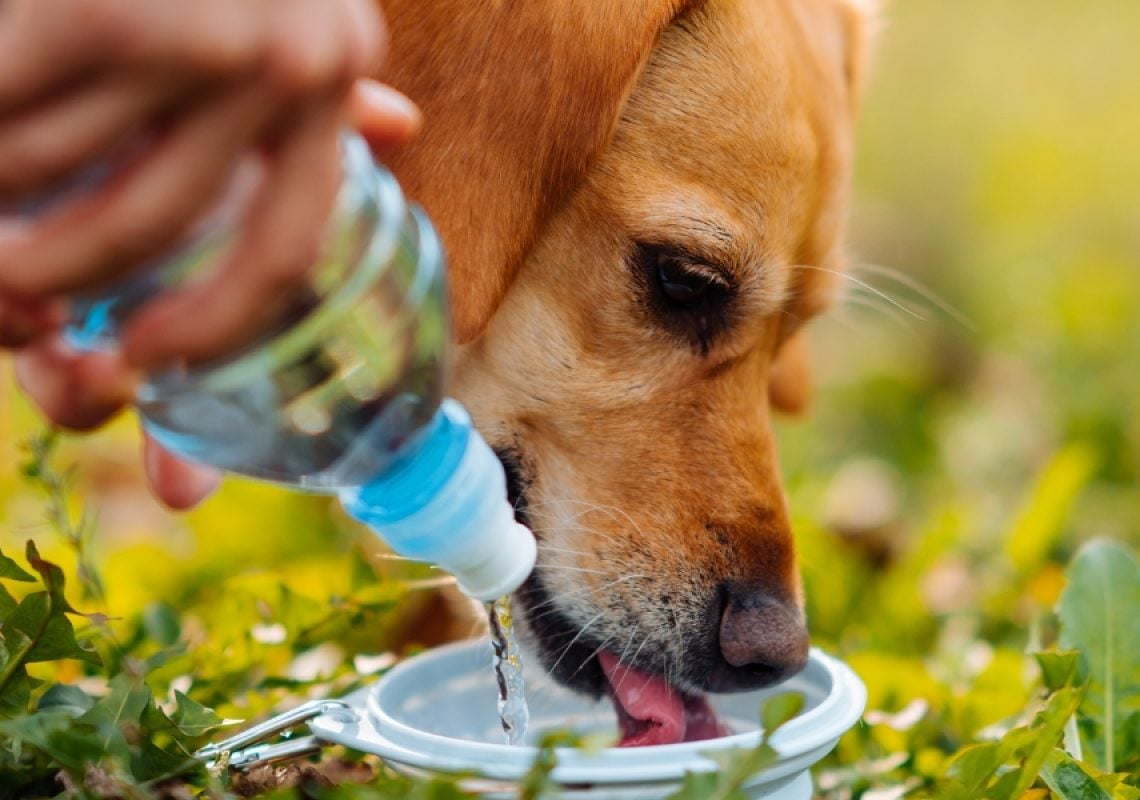
- Travel Bottles: Always bring a travel water bottle and collapsible bowl on walks and outings.
- Add Water to Meals: If your dog doesn’t drink enough voluntarily, add warm water or dog-safe bone broth to their daily kibble to force hydration.
5. Recognize Heat Exhaustion Instantly
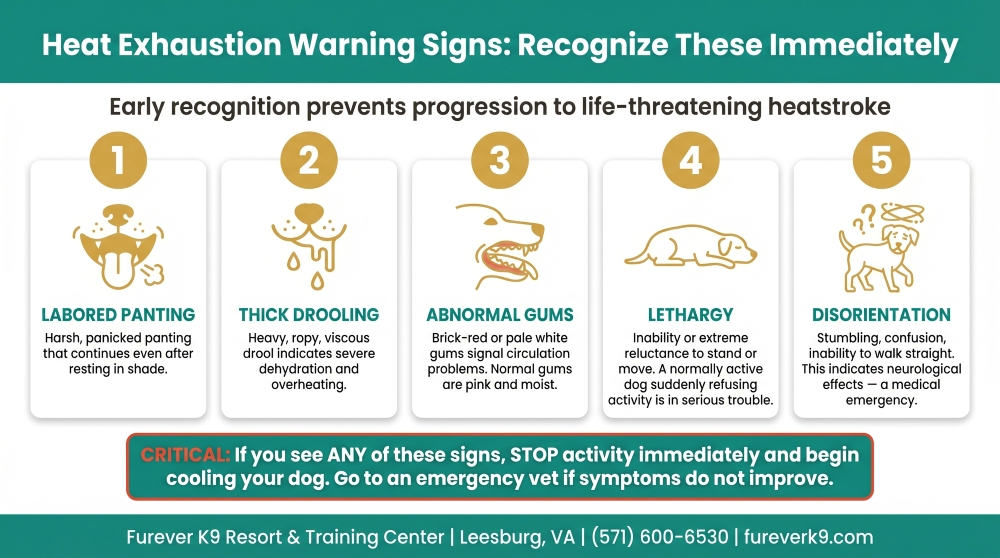
Early recognition and immediate intervention are the only ways to prevent mild heat stress from progressing to life-threatening heatstroke. If you see any of the following signs, the activity must stop immediately:
- Labored, Panicked Panting: Excessive panting that sounds harsh or continues without stopping even after resting in the shade.
- Thick, Ropy Drool: Heavy, viscous, thick drooling indicates severe overheating and dehydration.
- Abnormal Gum Color: Bright brick-red or very pale/white gums indicate serious circulation issues.
- Lethargy and Weakness: If your normally active dog suddenly cannot or will not move, they are in serious trouble.
- Disorientation: Dogs who seem confused, stumble, cannot walk straight, or are unresponsive are experiencing neurological effects from heatstroke. This is a medical emergency.
If you notice these signs, move to shade or A/C immediately, offer cool water (do not force it), apply cool wet towels to their groin and armpits, and fan them. Never use ice water, as it traps heat inside the core. Go to the emergency vet immediately if symptoms don’t improve.
6. Utilize Indoor, Climate-Controlled Outlets
When the Northern Virginia heat becomes too extreme for safe outdoor activities, you don’t have to leave your dog bored and under-stimulated at home.
At Furever K9 Resort & Training Center, we provide safe, climate-controlled environments where your dog can burn energy, learn new skills, and socialize without the risk of heat exhaustion.
- Climate-Controlled Boarding: If you are traveling this summer, our 9,500 sq. ft. facility features industrial-grade air conditioning to ensure your dog sleeps and plays in total comfort.
- Safe Indoor Training: Summer is the perfect time to enroll in our training programs. Whether you choose Board & Train, Day Training, or Private Lessons, your dog receives intense mental stimulation and physical exercise in a perfectly cooled environment.
- Supervised Play & Rest: Our structured routines ensure dogs get the right balance of activity and mandatory rest periods. We constantly monitor hydration levels and prevent dogs from overexerting themselves.
Mental stimulation (like obedience training and scent work) tires a dog out just as effectively as a long run, making our training programs the ideal summer solution for high-energy dogs.
Conclusion
Summer safety for dogs isn’t complicated, but it requires vigilance. Understanding that your dog cannot cool themselves the way you do, recognizing early heat stress before it becomes life-threatening, providing adequate hydration, and knowing when to stay indoors could save your dog’s life.
Northern Virginia summers are hot and humid—conditions that create significant risk for dogs. You don’t need to keep your dog locked inside all summer, but you do need to be smart about the timing, duration, and intensity of their outdoor activities. The difference between dogs who suffer heat emergencies and those who enjoy summer safely comes down to owner awareness.
Questions about keeping your dog safe this summer? Contact Furever K9 Resort & Training Center at (571) 600-6530 or visit us at 20690 Gleedsville Road, Leesburg, VA 20175.
Your dog is counting on you to make the smart decisions they cannot make for themselves. Don’t let the heat win.
FAQs
No, absolutely never. Even on a mild 70°F day, car interiors act like greenhouses and reach lethal temperatures within 10 minutes, regardless of cracked windows. Leave your dog safely at home or only bring them if they can come inside with you.
Generally, no. A double coat provides insulation against both winter cold and summer heat, while also protecting their skin from severe sunburn. Instead of shaving, focus on regular brushing and deshedding to remove the trapped undercoat and allow air to circulate.
As a general rule, if the air temperature exceeds 85°F, limit outdoor activity to early mornings or late evenings. Always factor in humidity, as high humidity prevents dogs from cooling down via panting, making 80°F with high humidity extremely dangerous.
They can help by utilizing evaporative cooling when wet, similar to how panting works. However, they are only a supplement to other safety measures and should never be used as an excuse to exercise a dog in unsafe, extreme heat.
Try adding water or low-sodium bone broth to their daily meals to increase their moisture intake. You can also offer ice cubes as treats, set up multiple fresh water stations, or use a pet water fountain, as moving water encourages some dogs to drink more.