Recognizing and Reducing Stress in Dogs: Identifying Symptoms and Effective Calming Techniques
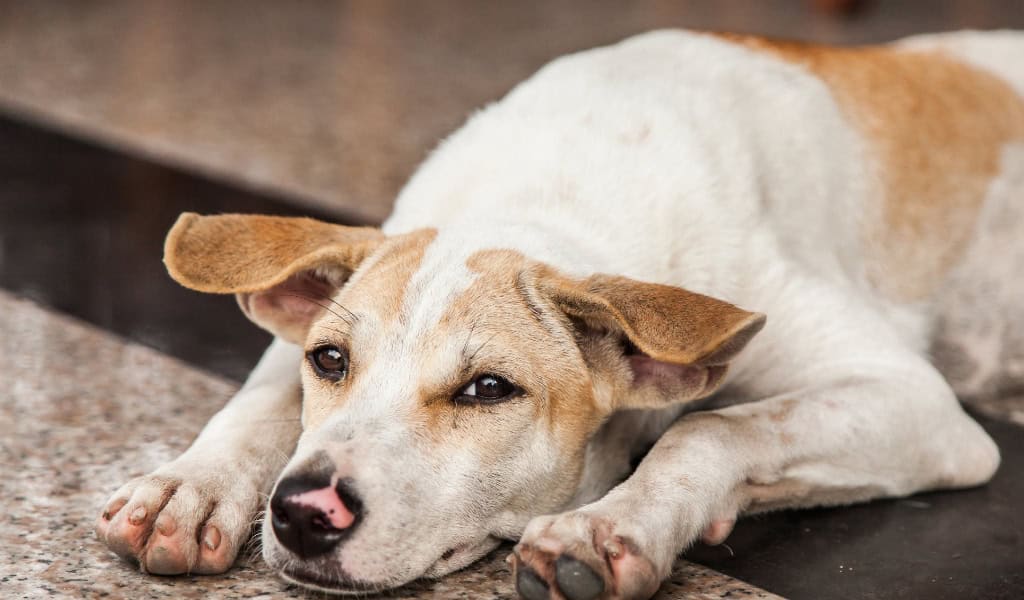
Your dog won’t eat. They’re hiding under the bed again. They’ve scratched the door frame raw while you were at work. The thunderstorm last night sent them into a panic that lasted hours after the storm passed. You feel helpless watching them suffer.
Here’s what concerned dog owners often miss. What looks like “bad behavior” or “sensitivity” is actually your dog experiencing genuine distress they can’t communicate or manage alone. That panting, pacing, and destruction isn’t stubbornness. It’s anxiety manifesting in the only ways your dog knows how to express overwhelming feelings.
At Furever K9 Resort & Training Center in Leesburg, Virginia, we help Loudoun County families recognize stress signals and implement strategies that actually reduce their dogs’ anxiety. The key isn’t just managing symptoms. It’s understanding what triggers stress and addressing those underlying causes.
What Are the Real Signs Your Dog Is Stressed or Anxious?
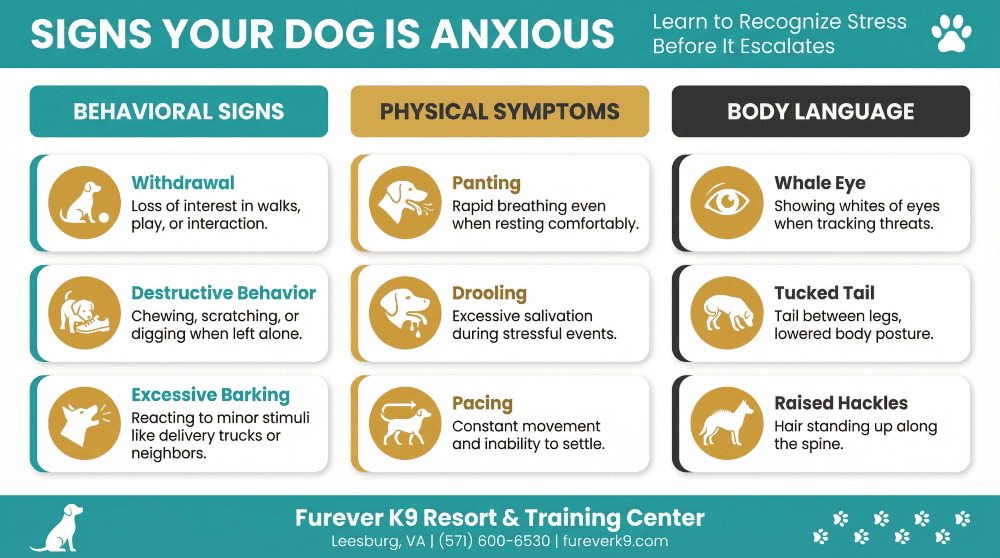
Stress in dogs manifests through behavioral changes, physical symptoms, and body language signals that many owners misinterpret or overlook entirely.
How Do Behavioral Changes Reveal Dog Anxiety?
Withdrawal from normal activities signals stress in many dogs. A dog who suddenly loses interest in walks, play, or interaction is communicating discomfort. This isn’t laziness or aging unless medical issues explain the change. It’s often anxiety making previously enjoyable activities feel overwhelming.
Destructive behavior when left alone frequently indicates separation anxiety rather than spite or boredom. Dogs experiencing genuine distress while alone chew furniture, scratch doors, or dig at carpets trying to escape anxiety, not to punish you for leaving.
Excessive barking, especially when triggered by minor stimuli like delivery trucks or neighbors walking by, often stems from anxiety-driven hypervigilance. Anxious dogs can’t distinguish between actual threats and normal environmental activity, so they react to everything.
Veterinary behaviorists note that general fearfulness, noise sensitivity, and separation anxiety are among the most common behavioral conditions affecting modern domestic dogs. These conditions cause immense suffering for both pets and their families if left unaddressed.
Repetitive behaviors like spinning, tail-chasing, or excessive licking indicate stress or anxiety in many dogs. These self-soothing behaviors help dogs cope with uncomfortable feelings but signal they need help managing stress more effectively.
What Physical Symptoms Indicate Stress in Dogs?
Excessive panting unrelated to heat or exercise frequently accompanies anxiety. Stressed dogs breathe rapidly with their mouths open even when resting in comfortable temperatures. This panting reflects their heightened physiological arousal state.
Drooling increases dramatically in anxious dogs, especially during stressful events like car rides, vet visits, or thunderstorms. The excessive salivation is an involuntary stress response.
Pacing and restlessness prevent anxious dogs from settling. They move continuously from room to room, window to window, unable to relax because their nervous system stays activated.
Changes in appetite affect many stressed dogs. Some stop eating entirely while others develop stress-induced stomach issues. Loss of interest in food that previously excited your dog signals something is wrong.
How Do You Read Dog Body Language Stress Signals?
- Raised hackles along the spine indicate fear, anxiety, or arousal. This involuntary response makes the dog appear larger during perceived threats. It’s not always aggression—often it’s fear.
- Avoiding eye contact or looking away repeatedly signals discomfort or stress. Dogs use this appeasement behavior to communicate they’re not threatening and feel uncomfortable with current circumstances.
- Stiff, frozen posture indicates high stress or fear. An anxious dog holds their body rigidly, unable to relax muscles. This differs dramatically from the loose, wiggly body language of comfortable dogs.
- Whale eye (showing whites of eyes) appears when dogs feel threatened or anxious. You see more white around the eye than normal as they track threats without turning their heads toward them.
- Tucked tail, lowered body posture, and pinned-back ears all communicate fear and stress. Dogs literally make themselves smaller when feeling threatened or overwhelmed.
At Furever K9, our behavioral evaluations teach Loudoun County owners to recognize these subtle signals before stress escalates to more serious behavioral problems.
What Actually Causes Stress and Anxiety in Dogs?
Understanding root causes allows targeted intervention rather than just managing symptoms.
How Do Environmental Factors Trigger Dog Anxiety?
Loud noises like thunderstorms, fireworks, construction, or even garbage trucks trigger intense fear responses in noise-sensitive dogs. This isn’t just “being dramatic.” These dogs experience genuine terror from sounds they can’t understand or predict.
Chaotic, unpredictable home environments create ongoing stress. Dogs thrive on routine and consistency. Homes with irregular schedules, frequent visitors, or constant activity keep dogs in heightened alert states.
Confined spaces trigger anxiety in some dogs, especially if they’ve had negative experiences in crates or small rooms. What feels secure to one dog feels terrifying to another.
Lack of adequate mental and physical stimulation creates stress through boredom and frustration. Under-exercised, under-challenged dogs develop anxiety from unmet needs manifesting as destructive or obsessive behaviors.
Why Does Separation Anxiety Develop?
Research on early life experiences and anxiety reveals that fearful dogs often had less socialization during puppyhood and lower quality maternal care. These early experiences shape adult anxiety susceptibility significantly.
Insufficient socialization during critical developmental periods (3-14 weeks) creates dogs who view unfamiliar situations, people, and experiences as threatening. What seems normal to well-socialized dogs triggers fear in inadequately socialized ones.
Previous trauma including abandonment, abuse, or multiple home changes increases separation anxiety risk. Dogs who’ve lost primary attachments before develop intense fear about losing current attachments.
Inadvertent reinforcement of anxious behavior happens when owners comfort panicking dogs excessively. While not causing separation anxiety, this can worsen symptoms by rewarding fearful behavior patterns.
How Does Inadequate Exercise Worsen Anxiety?
Physical exercise reduces stress hormones like cortisol while promoting calming neurotransmitters. Dogs lacking adequate activity maintain elevated stress hormone levels making them more anxiety-prone.
Mental stimulat ion from training, puzzle toys, and novel experiences provides focus that anxious dogs desperately need. Without cognitive challenges, anxious dogs ruminate on fears and potential threats.
Routine exercise creates predictability that reduces anxiety. When dogs know walks happen at specific times daily, they relax between activities instead of staying hypervigilant about when needs will be met.
Our training programs at Furever K9 incorporate appropriate exercise recommendations alongside anxiety-reduction techniques because physical wellness supports mental wellness.
What Calming Techniques Actually Work for Anxious Dogs?
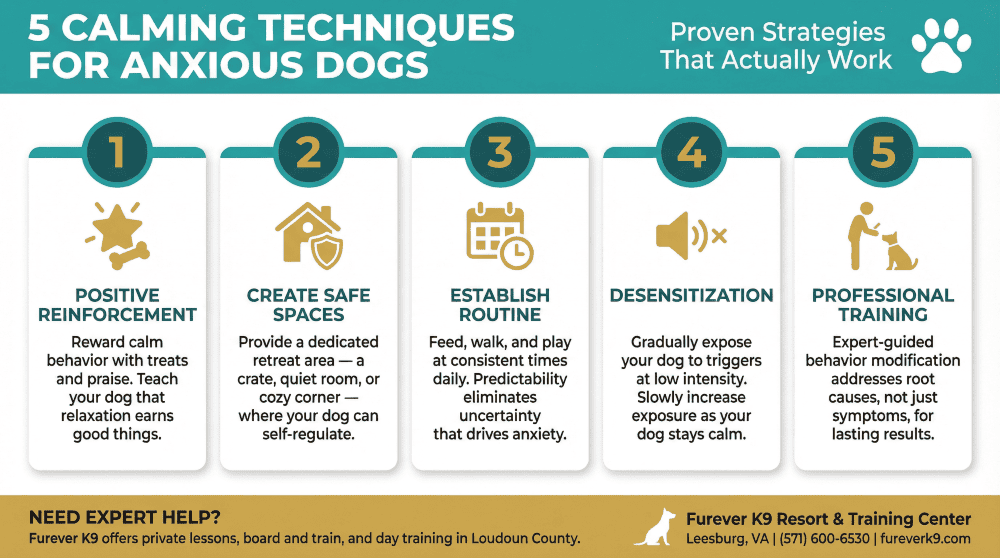
Effective anxiety management combines environmental changes, behavioral interventions, and sometimes professional training support.
How Does Positive Reinforcement Reduce Anxiety?
Rewarding calm behavior teaches dogs that relaxation produces good outcomes. When your dog settles quietly, mark that behavior with treats and praise. Over time, they learn calmness itself is rewarding.
Building trust through positive methods creates the secure relationship anxious dogs need. Force-based training increases fear and anxiety. Positive reinforcement builds confidence and emotional safety.
Teaching incompatible behaviors gives anxious dogs alternative responses to triggers. A dog who goes to their bed when the doorbell rings can’t simultaneously panic at the door. Training alternative behaviors provides coping mechanisms.
Counter-conditioning changes emotional responses to anxiety triggers. Instead of feeling fear when the mailman appears, your dog learns to associate the mailman with treats appearing. The emotional shift eliminates the fear driving anxious reactions.
What Environmental Management Helps Reduce Dog Stress?
Creating safe spaces provides anxious dogs with retreat areas where they feel secure. This might be a crate they view positively, a quiet bedroom, or a specific corner with their bed. Safe spaces allow dogs to self-regulate during overwhelming situations.
Establishing consistent routines dramatically reduces anxiety by creating predictability. Feed, walk, and play with your dog at regular times daily. Knowing what happens when eliminates uncertainty driving much canine anxiety.
Managing exposure to triggers prevents anxiety escalation while working on desensitization. If your dog fears other dogs, don’t force dog park visits. Control exposure distance and intensity during training.
White noise machines, calming music, or anxiety wraps provide environmental support for noise-sensitive dogs. These tools won’t solve anxiety alone but complement behavioral interventions effectively.
How Does Desensitization Training Work?
Desensitization gradually exposes dogs to anxiety triggers at levels that don’t provoke fear responses. If your dog fears thunderstorms, start with very quiet storm sounds while providing treats and play. Slowly increase volume over many sessions as your dog remains calm.
The process requires patience and careful progression. Moving too quickly or exposing your dog to full-intensity triggers before they’re ready worsens anxiety instead of improving it.
Professional behavior counselors agree that counter-conditioning and desensitization are among the most effective, evidence-based methods for addressing fear and anxiety in dogs. These techniques physically rewire the dog’s emotional response to stressful stimuli.
Combining desensitization with counter-conditioning produces best results. As you gradually increase trigger intensity, you’re simultaneously changing your dog’s emotional response from fear to positive anticipation.
Professional guidance from Furever K9’s behavior modification programs ensures proper implementation. Improper desensitization can worsen problems, but expert-guided protocols produce dramatic improvements.
When Should You Seek Professional Help for Dog Anxiety?
Some anxiety requires expert intervention beyond home management strategies.
What Signs Indicate Professional Training Is Needed?
Anxiety that worsens despite consistent home management efforts signals you need professional help. If you’ve implemented calming techniques correctly for 4-6 weeks without improvement, expert assessment is warranted.
Anxiety affecting your dog’s quality of life or physical health requires immediate professional intervention. Dogs who won’t eat, can’t settle for hours, or injure themselves during panic need expert help urgently.
Separation anxiety causing property damage, neighbor complaints, or housing issues justifies professional training investment. These problems won’t resolve without targeted intervention.
Anxiety accompanied by aggression needs immediate expert assessment. Fear-based aggression is dangerous and requires professional behavioral protocols, not DIY approaches.
How Does Furever K9 Address Canine Anxiety in Northern Virginia?
Furever K9’s comprehensive behavioral evaluations identify specific anxiety triggers and severity. We examine your dog’s history, current symptoms, environmental factors, and your management capabilities to create complete understanding.
Customized anxiety-reduction plans target your dog’s specific triggers using proven positive reinforcement methods. An anxious dog needs different interventions than a noise-sensitive dog or a dog with separation anxiety.
Our Private Lessons teach you to implement anxiety-reduction techniques correctly at home. You learn to read stress signals, manage environments, apply counter-conditioning, and progress through desensitization appropriately.
The Board and Train program provides intensive anxiety intervention for severe cases. Your dog stays at our facility receiving consistent, professional behavior modification to build a strong foundation before transitioning skills back home.
Ongoing support ensures techniques remain effective as situations change. Anxiety management is often ongoing, and having expert guidance for challenges that arise prevents setbacks.
Founder Lauren White and her team understand anxiety deeply—both from professional expertise and personal experience helping anxious dogs transform into confident companions.
What Role Does Training Play in Long-Term Anxiety Management?
Professional training doesn’t just address current anxiety. It builds skills and confidence preventing future anxiety development.
How Does Confidence-Building Training Reduce Anxiety?
Teaching new skills through positive reinforcement builds confidence that generalizes beyond specific commands. A dog who masters “sit,” “down,” and “place” learns they can succeed at challenges, reducing anxiety about unfamiliar situations.
Structured training provides mental stimulation that anxious dogs need desperately. The focus required during training redirects attention away from anxiety-inducing rumination.
Impulse control exercises help anxious dogs learn to pause before reacting. “Wait” and “settle” commands give dogs tools to manage their own arousal levels rather than being controlled by anxiety.
Our Group Classes offer controlled socialization opportunities essential for anxious dogs. In structured environments with expert guidance, anxious dogs learn that other dogs and people aren’t threatening.
What Makes Furever K9's Approach Effective for Anxious Dogs?
Furever K9 exclusively uses positive reinforcement methods that reduce rather than increase anxiety. Force-based training worsens fear and stress. Our approach builds trust and confidence while addressing behavioral issues.
Psychology-based understanding of canine anxiety ensures we address root causes, not just symptoms. We examine why your dog feels anxious before determining intervention strategies.
Customization based on individual dog needs means plans fit your specific dog’s triggers, temperament, and learning style. Generic approaches fail because anxiety is deeply individual.
Owner education ensures you maintain progress after formal training concludes. You learn to recognize early stress signals, prevent anxiety escalation, and respond appropriately to your dog’s needs.
The state-of-the-art facility at 20690 Gleedsville Road in Leesburg provides low-stress training environments essential for anxious dogs. Our 7.5 acres allow controlled exposure to triggers at appropriate distances and intensities.
Conclusion
Your dog’s anxiety isn’t just “sensitivity” or “bad behavior” they’ll outgrow. It’s genuine distress requiring understanding and appropriate intervention. Left unaddressed, anxiety often worsens rather than improves.
The difference between a fearful, stressed dog and a confident, relaxed companion comes from recognizing anxiety signals early and implementing proven reduction strategies. Not generic advice from the internet, but customized approaches addressing your dog’s specific triggers and needs.
At Furever K9, we’ve helped hundreds of Loudoun County families transform anxious dogs through psychology-based, positive reinforcement methods. Our approach addresses underlying causes while building confidence and providing coping skills.
Whether your dog struggles with separation anxiety, noise sensitivity, general fearfulness, or other stress-related issues, effective solutions exist. The key is expert assessment followed by customized intervention implemented consistently.
Ready to help your dog feel safe and confident? Contact Furever K9 at (571) 600-6530 or visit 20690 Gleedsville Road, Leesburg, VA 20175. Schedule a behavioral evaluation with founder Lauren White to discover your dog’s specific anxiety triggers and create a targeted reduction plan.
Your dog deserves to feel secure. Let us help you give them that gift.
PLOS ONE — Tiira & Lohi, 2015 — “Early Life Experiences and Exercise Associate with Canine Anxieties”
FAQs About Dog Stress and Anxiety
Anxiety involves physiological symptoms like excessive panting, drooling, dilated pupils, and trembling that dogs can’t control. Stubborn dogs remain calm physically while choosing not to comply. Anxious dogs want to comply but can’t because fear overwhelms them. Watch for stress signals: whale eye, tucked tail, lowered body posture, raised hackles, pacing, or inability to settle.
Rarely. Without intervention, anxiety typically worsens as dogs practice anxious responses repeatedly, strengthening those neural pathways. Early intervention produces better outcomes than waiting. Mild anxiety caught early often responds quickly to environmental management and training. Severe, longstanding anxiety requires more intensive professional intervention.
Fear is an immediate response to present threats. Anxiety is anticipatory worry about potential future threats. A dog fears the vacuum cleaner running now. An anxious dog worries about the vacuum appearing later. Both require intervention, but strategies differ. Fear responds to desensitization and counter-conditioning. Anxiety often needs broader confidence-building and routine establishment.
Rewarding calm behavior is effective. Excessively comforting panicked behavior can reinforce anxiety responses. Instead, remain calm yourself, provide safe spaces, and reward any moments of calm your dog shows. Use counter-conditioning (pairing triggers with treats) rather than comforting (giving attention for anxious behavior). Professional guidance clarifies this nuanced distinction.
Separation anxiety can be managed successfully, though “cured” suggests permanent resolution that may not apply to all dogs. Many dogs with separation anxiety learn to cope well with proper intervention, living comfortably when left alone. Some require ongoing management. Early intervention produces best outcomes. Severe cases benefit from Furever K9’s Board and Train program.